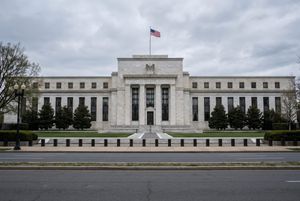
Today is the day. The Fed announces its rate decision at 2:00pm Eastern. Fed Chair Kevin Warsh holds his press conference at 2:30pm. The market has essentially decided the outcome already: futures put the probability of a hike at 9–10%. What's not decided is the signal. Investors are already pricing at least three more hikes in the next twelve months — the question is whether Warsh ratifies that pricing or pushes back against it. The decision lands with inflation at 3.7%, oil above $100, and six days before a national election. The Bank of Canada is also announcing this morning. All of it points to the same word economists have settled on: hawkish pause.
Wall Street traders know how to make money when stocks go up… down… or remain virtually unchanged…
And in just a few days, you can be using their Wall Street ways to pad your own bank account!
Imagine seeing your own investments pull in money, day after day…
Without waiting for big moves in the stock market… Without knowing insider information… And without spending days or weeks researching the right companies.
The secret to their 100% legal trading method is…
Wall Street doesn't just "trade stocks" or "invest." Instead they "leverage" the smallest movements in the stock market… Making 126% gains… 459% gains… or even 1103% gains… With just a few clicks on the computer.
Wall Street has been using this trading system for decades… But the average American is left in the dark on how quickly and easily Wall Street REALLY makes money.
If you're ready to make real money in the stock market as soon as next Monday… Tap here to discover the Wall Street Way to Wealth now!
The structure of today's announcement is worth understanding before 2pm. The statement drops first — a few paragraphs, heavily formatted, parsed by algorithms within milliseconds. Markets typically react to the statement before any human has finished reading it. The key phrases traders and systems will be scanning for: any change to language around "further tightening may be appropriate," any revision to the economic outlook section on inflation, and whether the word "patient" appears or disappears. None of that involves a rate move. All of it moves bond yields, the dollar, and risk assets within the first two minutes.
The press conference at 2:30pm is a different animal. Warsh will read a prepared statement, then take questions. The oil question will come — it always does when crude is above $100 — and his answer will either tighten or loosen the market's forward rate expectations. If he describes energy as a "supply-side factor outside the Fed's control," that's a dovish lean. If he calls it a "persistent upside risk to the inflation outlook," the market re-prices immediately toward the hawkish end of the range already priced in. The Bank of Canada's decision this morning adds a secondary reference point: if Ottawa also holds with hawkish language, it reinforces the narrative that major central banks are in a synchronized hold-and-warn posture.
Two People. Same Ounce of Gold. Two Very Different Prices.
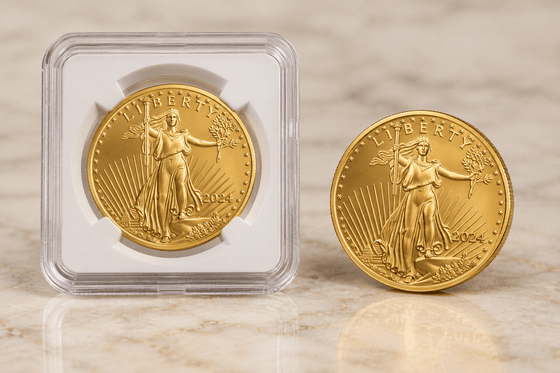
There is the price of gold. And there is the price you pay for gold.
Almost nobody checks the gap before they hand over money. Here is what sits in it.
• The spot price is public. Anyone can look it up for any date, including today.
• The premium is what a dealer charges above the metal. Published industry analysis puts margins on common bullion near five percent, and proof and specialty coin products closer to a third over melt.
• The difference compounds against you. At a thirty percent premium, gold has to climb thirty percent before you are back to where you started.
Gold slipped below $4,000 an ounce on October 23, roughly 29 percent off the January record. Plenty of people see an entry point. Fewer ask what they will actually be charged at the counter.
The free Gold Buyer's Audit shows you how to work the number out yourself. Where to look up spot for any date, how to calculate what you were charged above it, and which products carry the widest premiums. Ten minutes, whether you are about to buy or you bought years ago.
>> Send me the free Gold Buyer's Audit
Sincerely,
Sanctuary Metals
One last thing. The premium is the one cost nobody puts on a statement, because the dealer who charged it is not the company that sends the statement. Worth ten minutes of your time.
Precious metals involve risk and prices may go down as well as up. Past performance is not indicative of future results. This message is educational and is not investment, tax, or legal advice. Consult a qualified professional before making decisions about retirement funds.
The Bank of Canada's decision this morning is a useful frame for what to expect from the Fed. If Ottawa holds with explicitly hawkish forward guidance — as is the consensus expectation — it establishes that the narrative of "hold and warn" is not unique to the Fed but reflects a broader posture among central banks facing sticky inflation and oil above $100. That synchronized posture matters because it removes the "Fed is alone" escape valve. When multiple central banks are signaling the same thing, the market cannot price in a pivot at one while waiting on the others. The path of least resistance is to believe all of them.
The futures market is already pricing three hikes over the next twelve months. That is not a worst-case scenario — it is the base case. What Warsh says at 2:30pm either validates that base case, shifts it toward four, or offers the first hint that the ceiling might be lower. Any of those three outcomes moves assets meaningfully. There is no version of today where the statement and press conference produce no market reaction.
I need to speak with you directly.
I want you to see the most important warning of my career…
And one of the most important warnings any American family will receive before the next great financial crisis hits this country.
I'm Dr. Martin D. Weiss. I'm a Wall Street Journal, BusinessWeek, and New York Times best-selling author.
And for 55 years I have run Weiss Ratings… the only 100% conflict-free, independent financial rating agency in America. We are paid by no one we rate. We answer to no one but our subscribers.
And in the 55 years since I issued my first public warning before a financial crisis, I have publicly predicted six major American crashes, before they happened.
What I'm seeing now is a $3 trillion problem.
And the biggest danger right now is NOT just another stock market crash. The biggest danger is NOT only a major bank failure.
Rather, it's a chain reaction of crashes and failures that could cause a global freeze in the financial markets. And it starts here:
Go here now to see the most important warning of my career
Good luck and God bless!
Sincerely,

Martin D. Weiss, PhD
Weiss Ratings Founder
"I've been watching Fed days for a long time. The ones that actually surprise you are the ones where everyone was certain nothing would happen. Today the market is 90% sure on a pause — which is about as confident as you can be without putting 100% on it. That 10% is not noise; it's real tail risk with oil above $100 and CPI stuck at 3.7%. But the number that actually matters to me today isn't the rate. It's whether Warsh uses the word 'patient' or avoids it. That one word has moved Treasuries by 15 basis points in a session before. In a week with an election six days out, every basis point of yield movement lands somewhere in a household balance sheet."
Fed rate decision timing and Chair identity: Federal Reserve FOMC calendar, October 28, 2026. Kevin Warsh assumed the chairmanship in 2026. Statement at 2:00pm ET, press conference at 2:30pm ET.
Hike probability (9–10%): CME FedWatch Tool, based on 30-day federal funds futures, October 28, 2026.
Three hikes priced over 12 months: CME FedWatch futures strip and Bloomberg rate market analysis, October 28, 2026.
CPI (3.7%) and oil above $100: U.S. Bureau of Labor Statistics and CME/NYMEX, October 2026.
Bank of Canada decision: Bank of Canada rate announcement, October 28, 2026, scheduled for the morning session.
Days to election: U.S. general election scheduled November 3, 2026 — six days from the date of this publication.