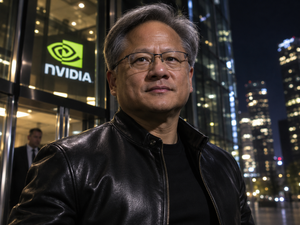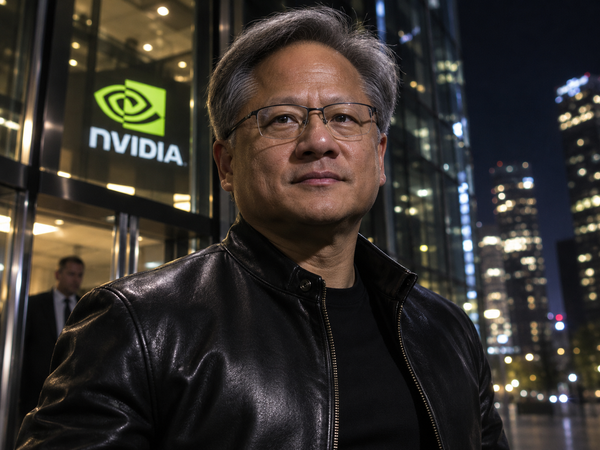
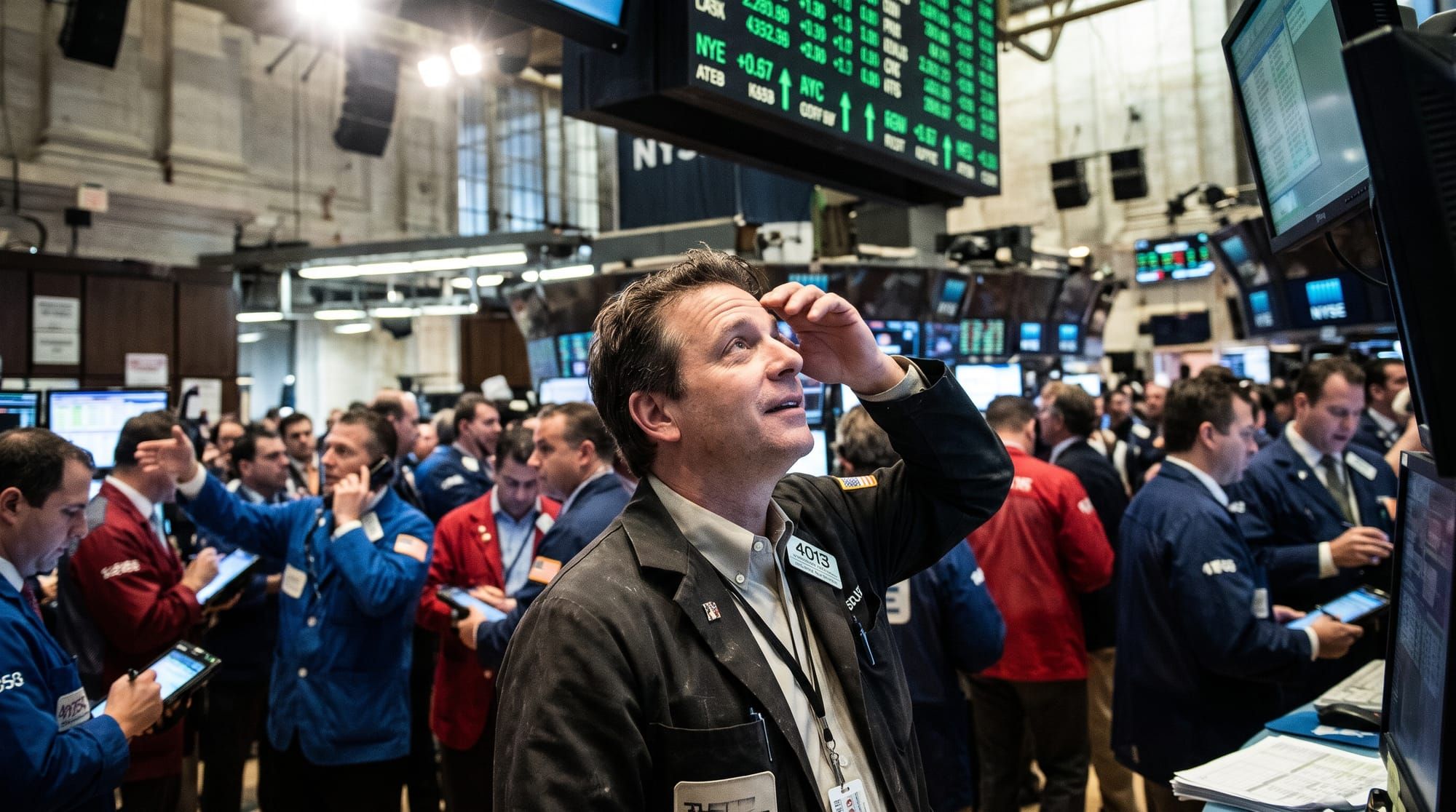
Wall Street finally got some good news on inflation. Producer prices rose just 0.3% in October — below the 0.4% economists expected and well under September's 1.3% jump. Stock futures climbed after the report. AMD and Broadcom are building on gains of more than 5% from Thursday as investors hunt for the next leg of the AI trade after Jensen Huang's departure rattled Nvidia. The relief is real, and the market is taking it. The reminder is also real: the 10-year Treasury yield topped 5% this week, and that number does not go away because one month's producer prices came in soft.
One soft inflation print does not make a trend, but it makes a Friday. The significance of today's PPI number is not that it proves inflation is conquered — Tuesday's CPI was hot, the 10-year has broken 5%, and December rate hike odds are still near 90%. The significance is that it removes the worst-case scenario from the near-term calendar. If PPI had also beaten forecasts, the market would have faced a week in which every inflation signal pointed in the same direction: higher for longer. That would have forced a reckoning with valuations built on assumptions that have been increasingly hard to defend. Instead, the PPI gives bulls a data point to stand on, and the market is using it to rotate out of the paralysis that set in after Jensen Huang resigned Thursday morning.

At what point does ambition start looking like madness?
Has Elon lost his mind… or are we STILL thinking too small?
And if his vision takes shape…
Which stock could ride along?
That's the question worth a closer look.
CLICK HERE to explore what could come next.
The chipmaker rotation into AMD and Broadcom is the most important market dynamic of the week that is not about Nvidia. When the AI trade's dominant supplier lost its founder on Thursday, the money did not leave the sector — it rotated within it. AMD and Broadcom were already moving on the back of their own earnings momentum and product cycles. Today's PPI relief added fuel. What the market is doing is not abandoning the AI infrastructure thesis; it is redistributing the bet across a wider set of beneficiaries. That is a healthier distribution than the one that existed a week ago, when Nvidia's weight in the index had become so large that one person's departure could move retirement accounts nationwide. The rotation is painful for Nvidia holders. For the broader AI ecosystem, it is probably good.
The 5% 10-year Treasury yield is not a number that goes away because stock futures are up on a soft PPI. It is a structural condition that changes the math on every growth stock in the market. When the risk-free rate is 5%, the discount rate applied to future earnings goes up, the present value of those earnings goes down, and every company that relies on the promise of large profits several years from now — the entire AI infrastructure sector, the biotech pipeline, the defense buildout — faces valuation pressure that has nothing to do with whether their products work or whether the demand is real. The demand is real. The products work. And yet the 10-year at 5% is a tax on the future that the market has to price every single day. Today's PPI gives the market a reason to think that tax might not get heavier next month. It does not make it go away.
Starting January 2027, a new mandate requires the U.S. military to source tungsten domestically, banning imports from China. Since the U.S. military relies on tungsten for everything from armor-piercing rounds to jet engines, they're racing to find a way of sourcing this critical mineral.
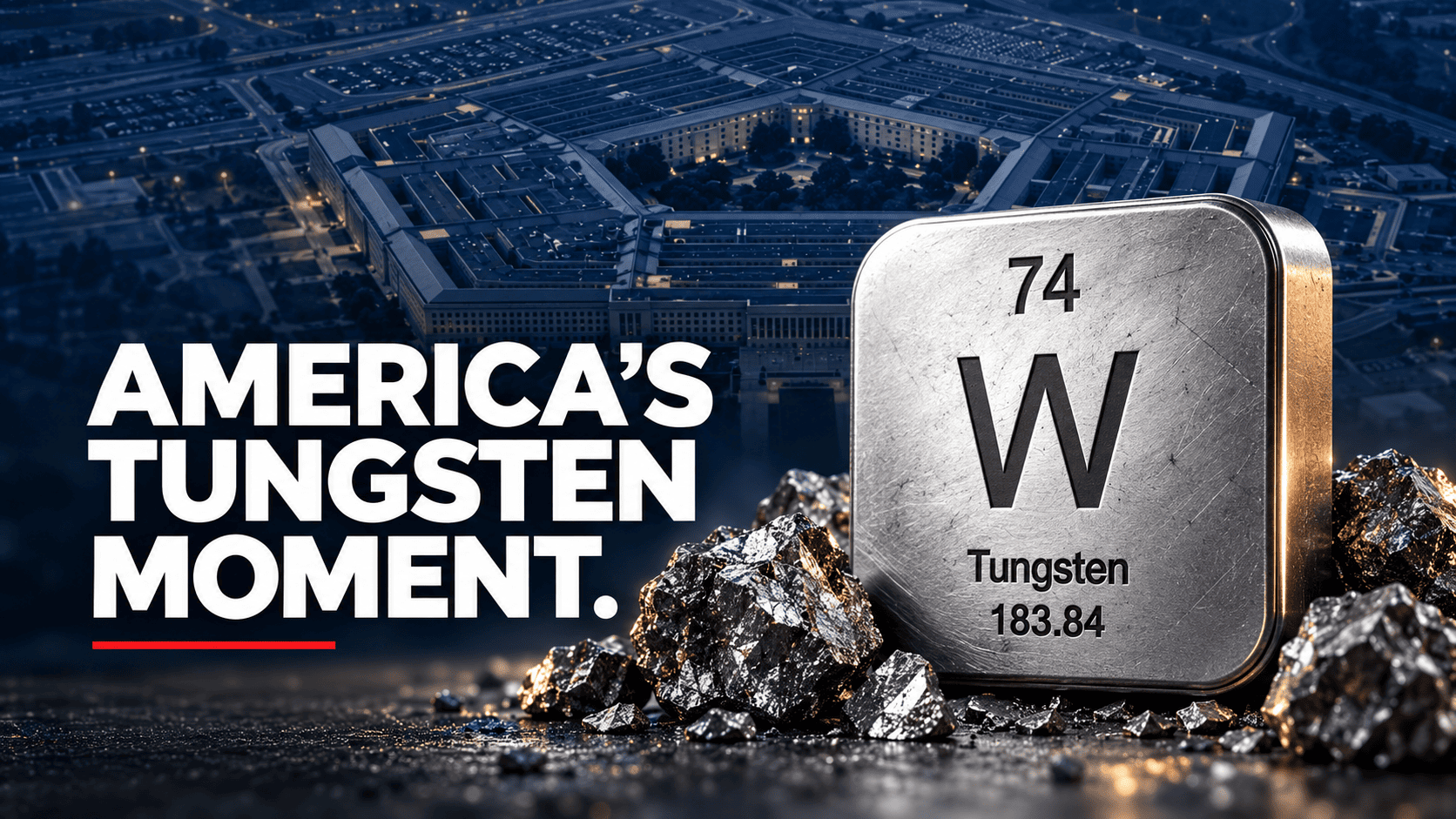
This is a massive opportunity for United States Tungsten. They're working to revitalize the Tungsten Queen, once America's largest tungsten mine: a massive asset containing 1 million tons of minerals worth an estimated $665M.
The White House just proposed raising the military budget to $1.5T next year. A bigger budget means more spending on the hardware that requires tungsten. As new laws require that money be spent on American-mined minerals first, United States Tungsten is positioned to become a supplier for one of the world's most reliable customers.
You can invest in the company behind this 1-million-ton stockpile.
This is a paid advertisement for United States Tungsten Corp's Regulation CF offering. Please read the offering circular at invest.unitedstatestungsten.com
This was the most disruptive week in markets since the AI selloff of early 2025. It opened with CoreWeave's $132.5 billion backlog confirming that AI infrastructure demand is real and contracted. It escalated with Tuesday's hot CPI reigniting December rate hike fears. It broke open Thursday morning when Jensen Huang resigned with no transition plan. And it ends Friday with a soft PPI that gives investors something to hold onto going into the weekend. The shape of the week matters: the AI trade did not collapse. It redistributed. The money that left Nvidia went into AMD and Broadcom. The fear that inflation was re-accelerating got one counterpoint. The bond market, which reopened Thursday after Veterans Day, priced all of it without cracking. That is not a clean week. It is, arguably, a resilient one.

My name is Jeff Brown, founder and CEO of Brownstone Research.
Something could happen on March 19 that catches most investors completely off guard.
A tiny stock — trading at under $1 — could announce a supply deal with Elon Musk.
If that happens, the move could be fast. Similar partnership announcements have sent Musk suppliers soaring by as much as 395% in a single day.
And the insider I recently interviewed believes that if you hold a little longer…

You could potentially see 39x your money in under two years.
This isn't a guess.
On page 37 of the SpaceX IPO filing, Musk names the exact sector this company operates in. And with $85.7 billion from the IPO and another $25 billion from bonds… Musk is about to go on a huge spending spree.
This company holds the keys to the future of Musk's AI masterplan. It's even helping roll a new Cybercab off the line every 10 seconds.
The insider who walked me through all of this has seen these kinds of gains in this sector countless times before…
Including turning $13,140 of his own money into around $1.85 million in under a year.
We put everything in an urgent strategy session — including a free ticker you can act on right away.
But you need to see it before March 19. After that, you could miss out entirely.
Click here to watch the strategy session now.
We have so much to look forward to,
Jeff Brown
Founder & CEO, Brownstone Research
P.S. March 19 is coming fast. Watch the strategy session today so you're positioned before any announcement. Click here to get the free ticker right now.
"Every week I've been doing this, I've seen the market do something that makes the previous week look simple. This week was not simple. Jensen left. CPI was hot. PPI was soft. AMD and Broadcom ran. The 10-year hit 5. And somehow, by Friday, the market is up on the week. I don't know what to tell you. The AI trade is real, the inflation fight isn't over, and the bond market is functioning under conditions that would have broken things two years ago. If you asked me to summarize this week in one sentence, I'd say: the thesis survived, but the thesis got harder."
PPI +0.3% October, below +0.4% forecast: U.S. Bureau of Labor Statistics, November 13, 2026.
AMD and Broadcom +5%+: Bloomberg market data, November 13, 2026.
10-year Treasury yield above 5%: U.S. Treasury, week of November 10–13, 2026.