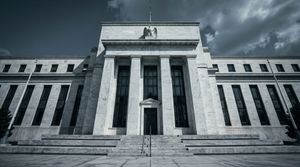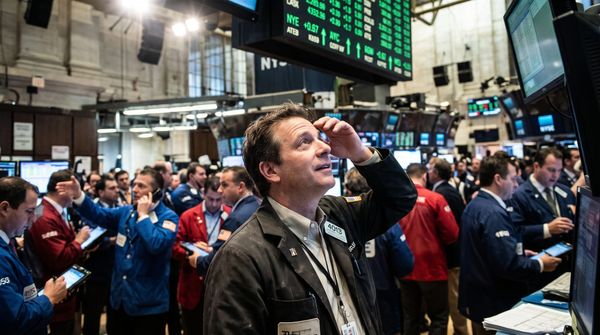
The two biggest tech earnings of the week landed on opposite sides of the ledger. Alphabet missed Wall Street estimates on both revenue and profit for the first time in nearly four years — search ad growth came in at just 12%, free cash flow went negative by $9.1 billion, and management pledged capital expenditures for 2027 that will be "significantly higher." The stock fell 10%, possibly the worst single-session reaction to an earnings report in the company's history. Microsoft did the opposite: Azure grew 48%, free cash flow hit $18.6 billion, and shares added 4%. The market's verdict was unusually clear: investors are no longer paying for AI ambition. They are paying for AI that generates cash.
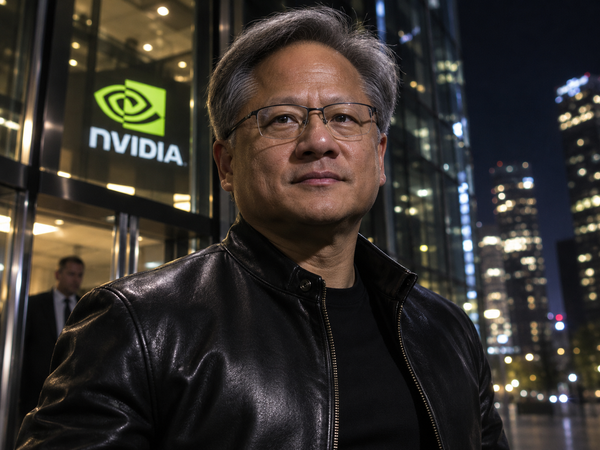
Former tech executive Jeff Brown, the man who picked Nvidia in 2016, before it jumped as high as 37,800%, just got inside a Cybercab, Elon Musk's new car that has no steering wheel or pedals… and what happens will shock everyone. Click here to see the details or read more below.
See the picture below…
I'm about to get into this Cybercab…
And it's going to take me to what Elon Musk called…
"The most epic AI project ever."
Click here and come with me on this ride…
Because I want you to see this with your own eyes.
Most people have no idea what's about to happen.
I'm not talking about self-driving cars…
Robots…
Rockets…
Or anything you might have heard of before.
It's much bigger than that…
Because this is all part of Elon Musk's $320 trillion masterplan…
A blueprint to completely dominate the entire AI industry.
Now, I have to warn you… Before you click here to see the details…
I'm going to ask you to keep an open mind…
Because chances are you're going to tell yourself that what Elon is planning next is impossible.
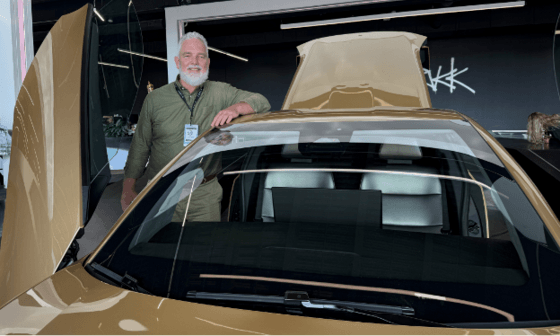
Click here and come with me on this Cybercab ride
We have so much to look forward to,
Jeff Brown
Founder & CEO, Brownstone Research
Alphabet's miss is harder to explain than it looks. Search advertising is not a broken business — 12% growth in a quarter is not a collapse. The problem is the cost side. Capital expenditures are running at a level that is consuming free cash flow faster than the AI revenue build can offset it. When management promises 2027 capex will be "significantly higher," investors hear a message they have heard before: trust the future spending, the returns will come. But the market has been hearing that from Alphabet for two years now, and this is the first quarter in nearly four years that the returns have not shown up in the income statement. The 10% drop is not a verdict on AI — it is a verdict on patience. The market has run out of it.
Microsoft's numbers tell a different story about the same race. Azure growing 48% is extraordinary at scale — Microsoft's cloud business is not a small operation where high growth rates are easy to sustain. Free cash flow of $18.6 billion in a single quarter means the AI build is happening and the business is still generating capital. That combination — aggressive investment and strong cash conversion — is exactly what the market is rewarding. The 4% gain is modest given the magnitude of the beat, which suggests investors expected Microsoft to outperform. What they did not necessarily expect was the size of the gap between the two companies' results. That gap is the story today.
Airbnb Proved Travelers Will Sleep Differently
In 2007, Airbnb started with three guests sleeping on airbeds in a San Francisco apartment.
Thirteen years later, Airbnb went public at $68/share.
The lesson?
Travelers will choose something other than a traditional hotel when a new format better fits the trip.
And another shift may already be underway.

America's national parks saw 323M+ visits in 2025. Meanwhile, Airbnb says searches for stays near U.S. national parks are up 35% in 2026.
That's exactly where AutoCamp built its business:
Hotel-grade Airstreams and cabins near destinations like Yosemite, Zion and Joshua Tree.
AutoCamp says it has already welcomed 1M+ guests across 8 properties and generated $150M+ in lifetime lodging revenue.
Now, everyday investors can invest in AutoCamp at $9.10/share.
Deadline to invest: Thursday, October 29.
This is a paid advertisement for AutoCamp Regulation Crowdfunding offering. Please read the offering circular at invest.autocamp.com
Alphabet's miss is not isolated. The company has been signaling heavier capital spending for months, and investors had largely accepted the argument that AI infrastructure build-out required patience. What changed this quarter was the math: the gap between what Alphabet is spending and what it is generating from that spending is now visible in the income statement in a way it wasn't before. A negative $9.1 billion free cash flow number, paired with a promise of even higher 2027 capex, forces a question that the stock price had been avoiding: when does the return show up?
Microsoft's Azure result at 48% growth is the counter-argument made in numbers. The same AI build is happening at Microsoft — the company has committed tens of billions to OpenAI and infrastructure. But Azure is converting that investment into revenue faster than Google Cloud is converting Google's investment. Whether that reflects better enterprise sales execution, more mature product-market fit, or a structural advantage from Microsoft's enterprise relationships is a debate analysts will run for weeks. What is not a debate is the result: one company is doing the AI transition and generating cash. The other is doing it and burning cash. The market has a clear preference.
President Trump just signed Executive Order #14330 — and it could permanently change retirement accounts.
For the first time, physical gold is being formally opened to millions of 401(k)s.
Since the announcement, gold surged from $3,400 to over $4,000 per ounce.
J.P. Morgan now projects $6,000 gold.
But here's the part most Americans don't realize:
If you're 59½ or older, you may already qualify to buy physical gold inside your retirement account — tax-deferred and penalty-free.
That means you can move before the crowd.
We created a free guide explaining exactly how it works.
"I've watched a lot of earnings seasons. The divergence between Alphabet and Microsoft yesterday is one of the cleaner market signals I've seen in a while — not because the businesses are that different, but because the outcomes are. Same macro environment, same AI race, same capex pressure. One company comes out with $18.6 billion in free cash flow. The other comes out negative by $9 billion. That's not a strategy question anymore. That's an execution question. And the market voted pretty clearly on which answer it trusts. If you've been riding the broad 'AI will win' trade in tech — both companies in a bucket together — today is the quarter that says that trade is over. You have to pick. And right now the market has picked."
Alphabet Q3 2026 earnings: Alphabet Investor Relations, October 28, 2026. Revenue and EPS both below consensus for the first time since early 2023. Search advertising growth +12%. Free cash flow −$9.1B. Management guidance on 2027 capex described as "significantly higher."
Alphabet share price reaction (−10%): NYSE/Nasdaq market data, October 28–29, 2026. Described by analysts as potentially the largest post-earnings one-day decline in company history.
Microsoft Q3 FY2027 earnings: Microsoft Investor Relations, October 28, 2026. Azure cloud growth +48%. Free cash flow $18.6B. Beat consensus on revenue, operating income, and EPS.
Microsoft share price reaction (+4%): Nasdaq market data, October 28–29, 2026.
Market interpretation — cash flow vs. AI spend: Bloomberg Intelligence, Goldman Sachs equity research, and Morgan Stanley tech sector notes, October 28, 2026.