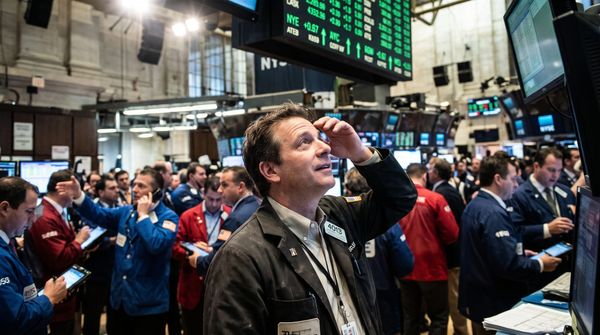
Yesterday's tech bounce is already fading. AI infrastructure names are falling again in pre-market Tuesday — led by CoreWeave, which lost more than 25% last week on concerns about the debt load backing its data center buildout. A Goldman Sachs upgrade Monday did not hold the floor. The question the market is asking this week: how much borrowed money is propping up the AI infrastructure trade, and what happens when rates stay high?
8,000X Oversubscription Could Reset Robotics Stocks
Robotics stocks are having a pivotal moment. And one of those stocks resets its price in days.
A recent robotics IPO was oversubscribed 8,000X, and nuts and bolts flew in celebration.
Experts say this frenzy is reshaping how investors view robotics stocks — including a private-stage company named Miso Robotics.
Miso's Flippy robot works the fry station and was already boosting profits up to 4x for restaurant brands like White Castle. That led industry powerhouse Ecolab to invest in Miso's growth and NVIDIA to collaborate.
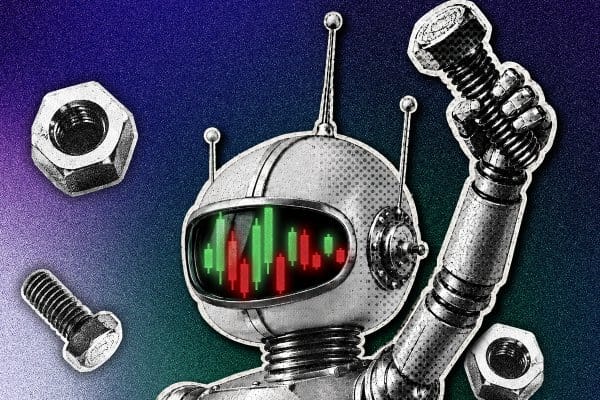
Now, after Miso made two major asset acquisitions in 2026, Flippy is the star of Miso's expanding ecosystem. Customers think of it as the new operating system for modern restaurants.
This year alone, Miso added big-name customers like Jersey Mike's and Cinnabon, and grew their patent portfolio by ~10X to over 300. Their robots have even expanded beyond restaurants, entering college campuses and NBA arenas.
44,000+ people already claimed their stake — before an 8,000X-oversubscribed IPO put a spotlight on the whole sector. See the current share price and decide for yourself.
Miso Robotics is offering securities through the use of an Offering Statement qualified by the SEC under Tier II of Regulation A. A copy of the Final Offering Circular may be obtained from: invest.misorobotics.com/
CoreWeave became the clearest symbol of the AI debt problem last week. The company — which provides GPU cloud infrastructure to AI developers — had been growing fast enough to attract a major IPO. But as the market started looking harder at its balance sheet, investors found something that made them uncomfortable: an enormous pile of debt taken on to finance the hardware buildout that underlies its business. When rates are near zero, that structure can work. When rates are persistently elevated, the carrying cost becomes a drag that erodes the equity case even as revenue grows. CoreWeave fell more than 25% last week on that logic. The Goldman upgrade on Monday gave it a brief look, but Tuesday's pre-market suggests the upgrade did not change the fundamental concern — just interrupted the selloff for an afternoon.
What makes this more than a CoreWeave story is the contagion pattern. Nebius, Micron, SanDisk, Intel — names with very different business models — are all down in Tuesday's pre-market. The common thread is not debt structure; it is exposure to the capital-intensive bet that AI infrastructure spending will compound indefinitely. Last week's selloff started to price in the possibility that it won't. Tuesday's continuation says that re-pricing is not finished.
Do you remember the subprime crisis of 2008?
Wall Street built a gigantic "pyramid of risk" based on subprime loans in the housing market. And then it all came tumbling down, along with almost the entire financial system.
Now, there's a new $3 trillion "subprime" crisis underway. Your wealth could be at risk again.
Go here now to see this urgent public warning (warning: It's a real EYE-OPENER).
Monday's bounce — S&P +0.4%, Nasdaq +1%, Nvidia +1.4%, Tesla +3.8% — now looks like what it probably was: a relief trade after an oversold week, not a signal that the market had resolved the underlying concerns. The AI capex debate is not settled. The earnings calendar has not yet delivered a definitive answer on whether hyperscalers are maintaining or cutting infrastructure budgets. And the debt load question that sank CoreWeave last week did not disappear overnight because Goldman changed its rating.
For a pre-retiree with tech exposure, the key distinction right now is between the mega-cap platform names — which carry relatively clean balance sheets and can fund AI investment from operating cash flow — and the infrastructure plays, which have been leveraging up to build capacity ahead of demand. The second group is what is under pressure. The question is whether the pressure stays contained there or begins to bleed into the broader tech tape as earnings week continues.
President Trump signed Executive Order #14330 — a sweeping change that could forever alter retirement accounts, including millions of 401(k)s.
For the first time ever, physical precious metals like gold are being formally opened to retirement portfolios.
Once the order takes effect in 2026, J.P. Morgan projects a massive wave of demand could send gold prices toward $6,000 per ounce.
That means you can beat the rush to gold, while preserving the full tax advantages of your account starting today.
With Executive Order #14330 now signed, the timing has never been clearer:
▶ Gold prices are up 51% in 2025
▶ J.P. Morgan forecasts gold hitting $6,000/oz
▶ Ray Dalio recommends a 10–15% gold allocation for all investment portfolios
If you want to capitalize on this trend, we've created a free guide that explains how to buy physical gold with your 401(k), IRA, or other retirement account.
Yes, Send Me My FREE Retirement-to-Gold Guide.
© 2026. All rights reserved. Tax benefits depend on individual circumstances. Always consult a tax professional. Not all retirement accounts qualify.
The debate this week is not whether AI is real — it is whether the debt being used to build out the physical infrastructure for AI is priced correctly. CoreWeave is the test case. Its 25% drop last week was the market deciding: no, it was not. The Goldman upgrade was the pushback: yes it was, the sell was overdone. Tuesday's pre-market is the response to the pushback: the market is not finished repricing.
The resolution comes from earnings, not from analyst notes. If the hyperscalers say this week that data center spending is intact, CoreWeave's debt makes sense because the revenue will materialize to service it. If even one major platform company hedges its infrastructure guidance, the debt story gets worse before it gets better.
"In freight, the guys who got hurt worst were never the truckers — it was the people who borrowed to buy the trucks at peak rates, thinking the loads would always be there to pay off the note. That's CoreWeave. The AI loads are real. The debt to carry the equipment is the problem. An analyst upgrading the stock doesn't change the cost of the debt. Only rates or revenue do."
Pre-market data (October 20, 2026): CoreWeave −3.1%, Nebius −2.9%, Micron −2.5%, SanDisk −3.0%, Intel −1.7%. Sources: Reuters, TipRanks, CNBC.
Monday close: S&P 500 +0.4%, Nasdaq +1.0%, Nvidia +1.4%, Tesla +3.8%. Goldman Sachs CoreWeave upgrade: Monday, October 19, 2026.
CoreWeave prior week decline: Greater than 25%, week of October 13–17, 2026, attributed to debt load concerns around AI infrastructure financing.