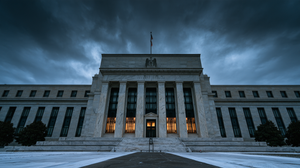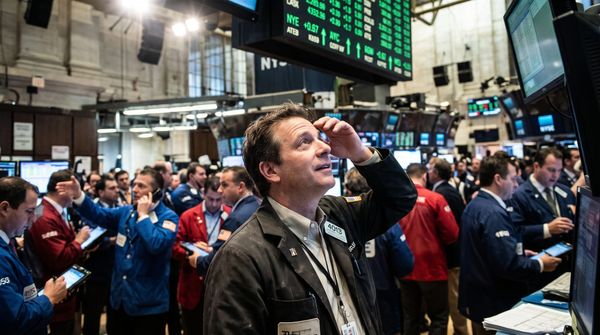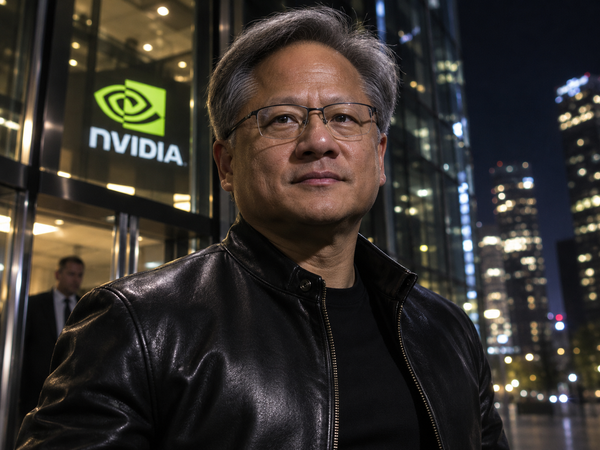
Korea halted trading in both the KOSPI and KOSDAQ on Wednesday after circuit breakers fired. The KOSPI closed at 5,554 — down 7.57%, its worst session in months, its seventh straight loss, and a cumulative decline of 21% over the streak. Samsung lost 9.5%, SK Hynix 11.1%. Foreign investors pulled 3.63 trillion won — roughly $2.7 billion — in a single session. The trigger: hot U.S. CPI and a spreading question about whether AI capex ever earns its cost.
Did you claim your $2,000 tariff dividend from Trump yet?!
Because it's not just a payout it's the first sign of a massive wealth shift already in motion.
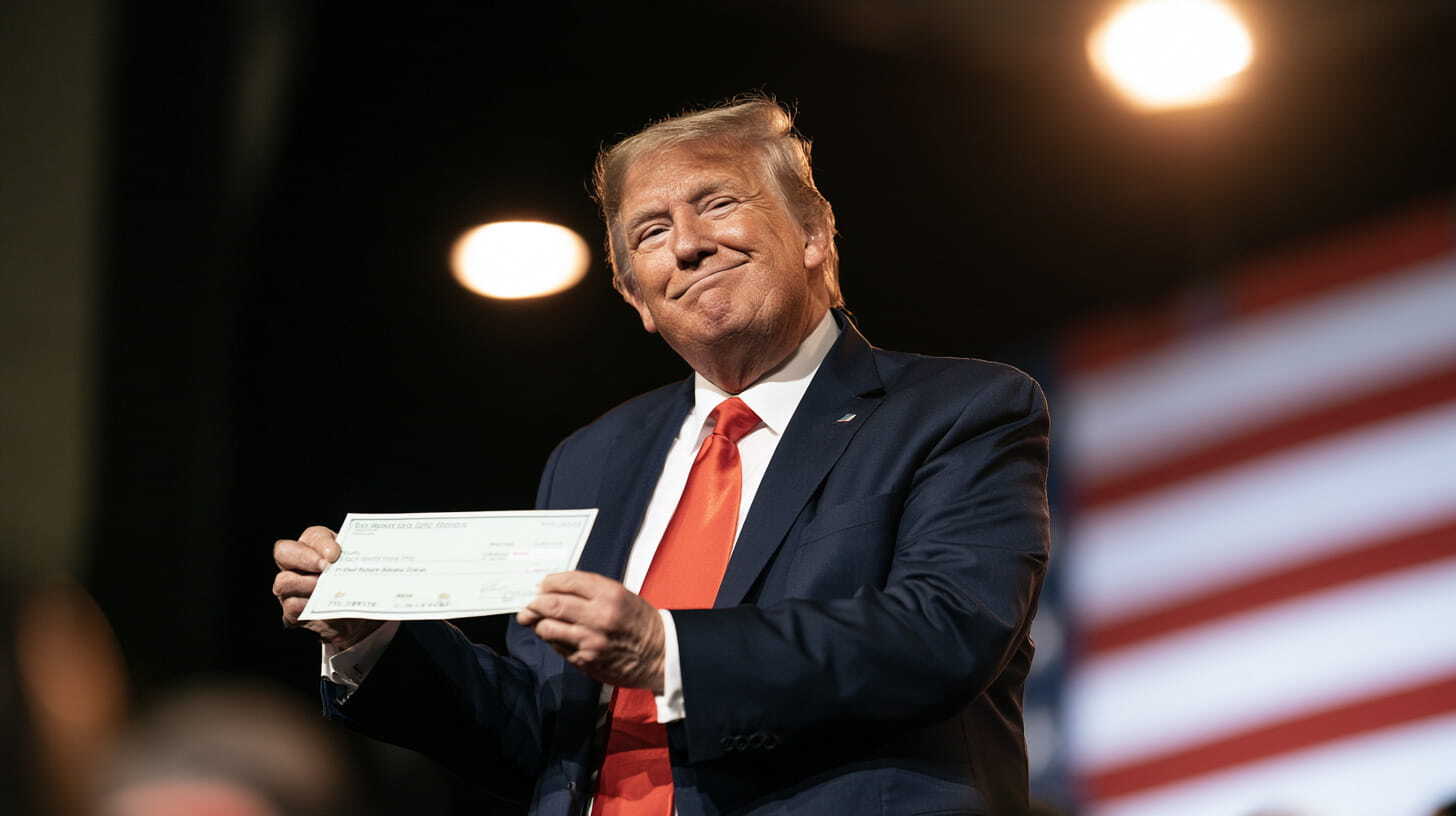
Trump's calling it a Restoration Dividend.
Others say it's "America's next great reset."
Here's the truth:
This isn't about charity, it's about taking control back.
Your savings. Your retirement. Your freedom.
The first checks are just the beginning.
The real opportunity? Is what comes next.
By the time the media catches up… it'll already be too late.
The proximate cause of Wednesday's rout is legible: the September CPI print came in at 3.7% — above the 3.6% consensus — driven by a 9.1% gasoline spike that reignited rate-hike expectations after weeks of Fed patience. The Philadelphia Semiconductor Index had already logged five straight losing sessions before Wednesday's 4.3% decline, its sixth. The Nasdaq shed 1.88% Tuesday. When Korea opened Wednesday, it opened with that data, and opened into the seventh day of a streak that had already erased 21% from the KOSPI.
But the rate-hike explanation is not the whole story. The deeper concern driving AI semiconductor stocks lower through six and seven straight sessions is a valuation question that has been building since spring: whether the massive capital expenditure that hyperscalers — Microsoft, Google, Amazon, Meta — are pouring into AI infrastructure will generate returns commensurate with what's priced into the chipmakers supplying them. SK Hynix makes the high-bandwidth memory that goes into Nvidia's H100 and H200 GPUs. Advantest tests the chips. Samsung manufactures the foundry logic. These aren't speculative AI plays. They are the physical supply chain for AI compute. When they sell off 9–11% in a single session, the market is pricing a question about AI demand durability, not just interest rates.
Why's This NVIDIA Collaborator Robot Called Flippy? (Invest Now)
We all see robots flipping on social media. But a french-fry robot named Flippy? That doesn't make sense.
Miso Robotics' share price jumps in days — this is your last shot at today's price, has heard it all before.
But ask restaurant operators in the $1T fast-food industry like White Castle who deploy Miso's Flippy Fry Station robot, and it sure makes a lot more sense.
Flippy FLIPS restaurant operator's bottom lines, helping boost a location's profits up to 4X.
And with Miso having a $4B/year US revenue opportunity for just the fry station alone and a special collaboration with NVIDIA, these french fries are way beyond small potatoes.
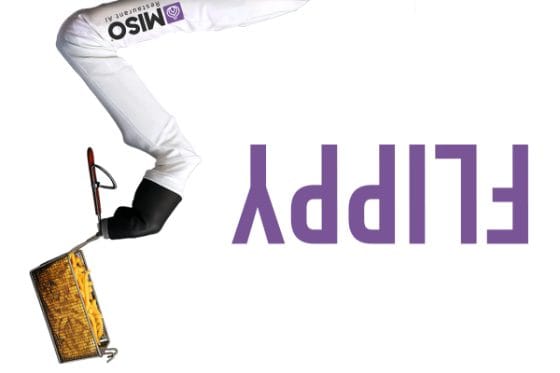
Right now — while everyone else is just talking about AI robots — Flippy is already flipping fries at White Castle, Jersey Mike's, and Cinnabon. This window won't stay open.
After Miso recently acquired two major new product assets, Flippy has become the star of a rapidly expanding ecosystem. Customers think of what Miso is building as the operating system for modern restaurants.
Miso just added big-name customers like Jersey Mike's and Cinnabon… and grew its patent portfolio by ~10X to 300+. On top of that, their robots even started entering college campuses, NBA arenas, and a new national burger chain.
Over 44,000 everyday investors have already claimed their stake. Every day you wait is a day someone else takes your spot. This isn't a "someday" — it's right now. The $5.60 price is gone for good.
Days left. $5.60/share is a price you won't see again. Get in while the window's still open.
Miso Robotics is offering securities through the use of an Offering Statement that has been qualified by the Securities and Exchange Commission under Tier II of Regulation A. A copy of the Final Offering Circular that forms a part of the Offering Statement may be obtained from: invest.misorobotics.com/
SoftBank fell roughly 8% in Tokyo, extending a pattern that has tracked the AI capex narrative closely since its Vision Fund restructuring. The Nikkei lost 4.5%. The circuit breakers in Seoul — which require a 10% intraday move to fully halt trading but triggered earlier mechanisms at the 8% threshold — fired on both the large-cap KOSPI and the tech-heavy KOSDAQ simultaneously, which last occurred during the April 7 tariff shock session. Foreign investors, who had been net buyers of Korean equities through most of the year, pulled 3.63 trillion won in a single session. That's not rotation — that's exit.
The 5,554 close on the KOSPI is the lowest since April 7. It also puts the index down roughly 21% from its July peak — a figure that exceeds the technical definition of a bear market for the index. For a pre-retiree with any exposure to international equity funds, emerging market ETFs, or technology-weighted 401(k) allocations, this week is a live demonstration of how AI-themed valuation risk, held in hardware and memory companies rather than software, can produce losses that move faster than quarterly rebalancing cycles.
Pull up the price of gold right now.
Somewhere north of $4,000 an ounce.
Now here's the part almost nobody knows:
By federal law, the United States government values its own gold at exactly $42.22 an ounce.
That's not a typo.
The official price was fixed by statute in 1973... and it has never been updated.
Which means America's 261.5 million ounces of gold sit on the government's books at about $11 billion...
While their real market value is roughly $1 TRILLION.
For fifty years, that trillion-dollar gap was just a Washington accounting quirk. A dusty number nobody touched.
Not anymore.
In May, gold revaluation showed up in an actual bill introduced in Congress.
And Treasury Secretary Scott Bessent has been talking openly about "monetizing the asset side of the balance sheet."
Ask yourself: what asset do you think he means?
This is exactly the event a new emergency briefing calls The Great Gold Reset.
Because here's what you need to understand about a revaluation:
It is not a market move. There's no trend to watch. No chart that warns you.
It's a signature.
The last time Washington repriced its gold, in January 1934, the law passed one day... and the new price was announced the next. Gold jumped 69% by government decree, the dollar was devalued overnight, and ordinary Americans, who had already been ordered to turn in their gold at the OLD price, got nothing.
The people positioned before the signature won. Everyone else paid for it.
And listen: if you have $100,000 or more sitting in a 401(k) or IRA right now, you should pay closer attention than anyone.
Because those dollars are the exact thing a reset reprices. Not the gold. The paper measuring it.
The video is free. The companion guide is free.
The only thing that expires is the word "before."
P.S. $42.22. That number has survived nine presidents. There's a reason Washington suddenly wants to change it, and a reason they're not holding a press conference about it. See the full story here.
This week runs three interlocking stories. The September CPI print confirmed that inflation is not dead — it just needed an energy catalyst to show itself. The Korea circuit-breaker session confirmed that AI hardware valuations were carrying more risk premium than the headlines acknowledged. And the two-week window before the November 3 midterms means that every piece of economic data landing between now and then will be read through a political lens that distorts its actual signal value.
The number that actually governs the December 8 Fed meeting is the October CPI, due in mid-November. By then, gasoline prices — the driver of September's surprise — will have reversed or held. The AI selloff, if it deepens, creates financial conditions tightening that argues for Fed patience regardless of the headline inflation number. A pre-retiree tracking both exposure to technology-weighted retirement accounts and the cost of energy should be watching two separate dashboards right now: what the hyperscalers say on earnings calls in the next two weeks, and what AAA's daily national diesel average does between now and November 3.
"In freight, when the lead carrier on a lane suddenly reprices, everyone who runs that lane has to reprice within 72 hours or lose the business. It doesn't matter that the underlying cost structure hasn't changed — the market moved, so you move with it. That's what happened in Seoul on Wednesday. SK Hynix didn't get worse at making memory chips. The price of being the lead carrier in AI infrastructure just got repriced, and everyone downstream had to follow. Whether the new price is right depends entirely on whether the shippers — the hyperscalers — actually show up with the volumes they promised. Earnings season is the freight tender. We'll know in two weeks."
Confirmed: KOSPI closed at 5,554.22, down 7.57% — lowest close since April 7 and seventh consecutive losing session; circuit breakers triggered on both KOSPI and KOSDAQ (Reuters, Bloomberg, Investing.com, Oct 14–15). KOSPI down 21% over seven-session losing streak. Samsung Electronics −9.5%; SK Hynix −11.1%; Advantest (Tokyo) ~−11%. Foreign investors sold 3.63 trillion won (~$2.7 billion) in a single session (AJP, Bloomberg). Nikkei 225 −4.5%; SoftBank ~−8%. Philadelphia Semiconductor Index −4.3% on Tuesday, Oct 13 — sixth consecutive losing session. Nasdaq −1.88% Tuesday. Cited causes: hot U.S. September CPI (3.7% YoY, above 3.6% consensus) and investor uncertainty over AI capex returns (Reuters, Bloomberg).
Context: KOSPI circuit breakers also triggered April 7, 2026 during tariff shock session. Hyperscaler earnings: Microsoft Oct 22, Google Oct 23, Meta Oct 24. Fed Beige Book: Oct 22. December Fed meeting: December 8.