
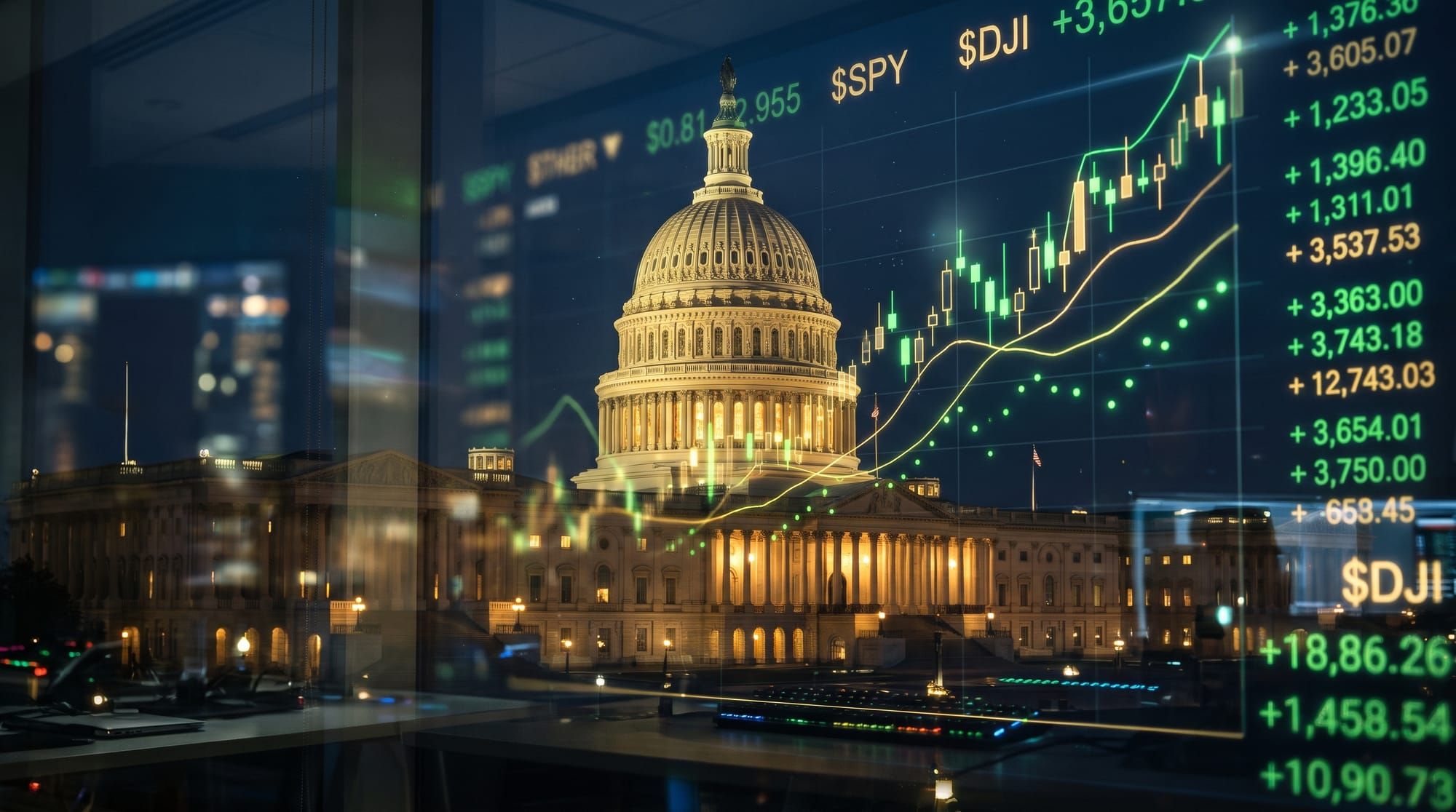
Democrats swept both chambers of Congress Tuesday night — and markets responded with a rally. Nasdaq-100 futures had fallen as much as 2.4% on the first reports, but by morning the picture looked entirely different: the Dow gained 1.3%, the S&P 500 roughly 1%, and the Nasdaq-100 added 0.9%. The logic is not complicated. Analysts at Capital Economics pointed out that Democrats lack the 60 Senate votes to break a filibuster, and Trump retains veto power over any legislation. The result is divided government — and divided government, the market has learned over decades, usually means less gets changed. The 10-year Treasury yield slid to 4.92%. The dollar weakened.
I remember when Starbucks went public. June 1992.
They didn't grow coffee. They bought the beans… and sold the cup.
Starbucks kept the markup on every latte.
Investors who bought at that IPO did remarkably well.
A company with its US headquarters in Chicago runs a similar playbook… one step earlier.
It owns the tree.

45 Colombian farms. 10,000+ acres. Juan Valdez® retail rights.* 3,000+ stores, the company says.
Still private. Accredited and non-accredited investors can participate, subject to limits.
This is a paid advertisement for Green Coffee Company's Regulation A offering. Please read the offering circular at https://invest.greencoffeecompany.com/. Timelines are subject to change. Listing on the NASDAQ is contingent upon necessary approvals, and reserving a ticker symbol does not guarantee a company's public listing.
The overnight reversal is worth examining closely, because it happened fast. The initial reaction — futures falling 2.4% — was a reflex. It was the kind of move that happens when algorithms read a headline before anyone has thought through what divided government actually means in practice. The recovery happened as the institutional community ran the analysis: the Democrats won the Senate, but not with a supermajority. They won the House, but with a narrow margin. The legislative agenda that equity markets would genuinely fear — dramatic tax hikes, significant new regulation — requires 60 Senate votes to pass, or a willing Republican caucus that does not exist. Neither condition is met. The selloff was repriced within hours.
The bond market's reaction is the more interesting signal. The 10-year yield falling to 4.92% — down from above 5% in recent sessions — reflects two things simultaneously: a reduction in inflation risk expectations under divided government, and a small rotation back into Treasuries as a risk-off trade during the overnight uncertainty. The dollar weakening alongside yields is consistent with that read: foreign capital that had moved into dollar-denominated assets in anticipation of a strong Republican result is unwinding. That is not a crisis signal. It is a position adjustment.
President Trump has signed Executive Order 14330.
And it could change what you're allowed to own inside your 401(k).
For decades, most 401(k)s have offered the same short menu.
That may be about to end.
Millions of Americans could soon get access to an investment their 401(k) has never offered before.
Most people have no idea it's coming.
Congress can slow things down. But executive orders don't wait for a vote.
👉 Read the full story here
Regards,
Anchor Point Research
The number that matters most from last night is not the Senate seat count — it is the 60-vote threshold that Capital Economics flagged. Without a supermajority, the new Democratic majority in the Senate cannot advance most significant legislation on its own. The filibuster requires 60 votes to break, and Democrats are not close. That means the legislative agenda that could move markets — changes to corporate tax rates, major new financial regulation, significant energy policy shifts — cannot pass in its most aggressive form. The Trump veto adds a second constraint. Any bill that does reach the President's desk will be one he was willing to sign. The market is pricing the realistic set of outcomes, not the theoretical maximum.
The Nasdaq's move from −2.4% to +0.9% in a single morning is a reminder that election-night reactions are almost always wrong in their initial direction. The pattern is consistent across election cycles: the first move is based on incomplete information and position liquidation; the second move, once results are finalized and analysis is complete, is based on what the results actually mean for policy. This morning's reversal fits that pattern exactly. Whether it represents the beginning of a broader recovery from the correction — the Nasdaq is still more than 10% below its high — or just a one-day relief bounce is what the next two weeks of data will decide.
Only 2,500 complimentary copies were set aside for this release.

The dollar weakened overnight. That is not a one-day story.
And they reveal something every American nearing retirement should see:
What Washington isn't saying about the U.S. dollar — and what it could mean for the money you spent decades building.
Claim my free copy here.
Inside: the global move away from the dollar, Washington's money creation, and the growing push toward a digital dollar.
This guide costs you nothing.
But complimentary access is limited to this release.
America's dollar has survived a lot.
But 3 forces are now putting retirement savings under a microscope:
→ More global trade moving outside the U.S. dollar
→ Washington's massive debt and continued money creation
→ The growing push toward a government-backed digital dollar
Don't be the person hearing about upcoming changes after everyone else.
Reagan Gold Group does not provide financial, legal, or tax advice. This information is for educational purposes only and should not be considered investment advice. All investments carry risk, including loss of principal. Past performance is not indicative of future results. Consult your licensed financial advisor before making investment decisions.
"In 40 years of watching markets react to elections, the most reliable pattern I've seen is this: the market is not rooting for a party. It's rooting for predictability. Last night's result — Democrats win, but not enough to do much with it — is about as predictable an outcome as you can get. No landslide, no mandate, no dramatic policy swing. The market priced in chaos and got a stalemate. A stalemate is not exciting, but for a portfolio, it's worth quite a lot. The futures were down 2.4% and I went back to sleep. By morning I wasn't surprised."
Election results and Congressional control: AP, Reuters, and NBC News election desks, November 4, 2026 (early morning). Democrats projected to hold Senate and House majority.
Market levels and overnight futures: Bloomberg market data and CME Group futures data, November 4, 2026. Nasdaq-100 futures low of −2.4%; morning market open: Dow +1.3%, S&P 500 ~+1%, Nasdaq-100 +0.9%.
Capital Economics analysis: Capital Economics research note, November 4, 2026. Filibuster threshold and veto power cited as constraints on Democratic legislative agenda.
10-year Treasury yield and dollar: Bloomberg bond market data and Reuters FX data, November 4, 2026. 10-year yield at 4.92%; dollar index weakening on position unwind.