Trump's Verdict
"Very Good"
Trump Threats Walked Back
8x
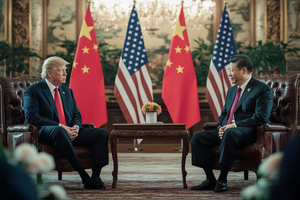
In logistics auditing, the first direct conversation between two parties that have been communicating only through intermediaries and legal filings is called the primary contact moment. It does not resolve the dispute. It establishes that a resolution channel exists. Before the primary contact moment, both sides are negotiating with the version of the other party that their lawyers and intermediaries have constructed. After it, they are negotiating with each other. Yesterday in New York, the United States and Iran had their first direct talks in a period described by multiple outlets as "a long time" — three hours, at the margins of the UN General Assembly, with Steve Witkoff and Jared Kushner representing the U.S. side. Trump told reporters the meeting was "very good and productive" and that a follow-up meeting is scheduled "very shortly." The primary contact moment has happened.
The account of what happened in those three hours differs significantly by source. Trump did not name the Iranian delegation, did not describe terms discussed, and did not indicate whether any framework was proposed. Iranian state television reported a different version: that the meeting happened at Witkoff's insistence, and that Iran delivered its conditions — immediate lifting of the naval blockade, unfreezing of Iranian assets, and cessation of hostilities on all fronts — as prerequisites for any deal. Those are maximalist opening conditions. They are also, structurally, the standard opening position of a party that has been told by the other side that the alternative to a deal is annihilation. Iran is negotiating. Its opening ask is everything it wants. The gap between those conditions and what the U.S. is prepared to offer is the actual negotiation.
Simultaneously, in his UNGA address, Trump told the General Assembly that he faces a "big decision": give Iran a chance at reconstruction, or "destroy quickly." He said he expects a deal after the midterms and blamed Iran for stalling to see the election result. One important piece of context, confirmed by ABC: Trump has walked back major escalation threats at least eight times during the 206-day conflict. The three-hour New York meeting happened on the same day as that speech. Both are true simultaneously. For the pre-retiree watching oil at $107.80 and a December Fed hike signal from the Dot Plot, both are consequential — the speech sets the political frame, the talks set the resolution timeline.
Sponsored
No one has told you about it or prepared you for it…
But America's money is being replaced.
A dollar reset on this scale has happened just once before in our 250-year history.
That was back in 1974, with a secret deal struck in a Saudi desert that quietly determined the financial fate of an entire generation of Americans.
It created extraordinary wealth for some, while casting millions more into relative poverty.
Now, 52 years later, it's happening again.
And I'd like to show you how to prepare for it, while there's still time.
My name is Porter Stansberry.
I'm the founder of one of the largest independent financial research firms in the world. Over the last 30 years we've helped hundreds of thousands of Americans navigate almost every major economic cycle.
We've been on the forefront of every big financial story – from the collapse of Fannie Mae and Freddie Mac to the rise of Bitcoin, the COVID inflation surge, and the artificial intelligence revolution.
But today, I need to expose a story the likes of which we haven't seen in half a century.
And as you'll see, the aftershock of this event could reset not just your personal wealth, but the entire foundation of the U.S. dollar.
How you save, how you invest, how you protect everything you've built… it's all being reshaped by what Fortune calls "the biggest change to the world's relationship with the dollar" in a generation.
Yet almost nobody is prepared for it.
So if you've been watching the chaos of the past year unfold, struggling to make sense of it all – you're about to get the answers you've been searching for.
Everything from the government taking direct equity stakes in tiny mining companies… to Trump's obsession with Greenland… his strange deals with Elon Musk, Jeff Bezos, Sam Altman, and Mark Zuckerberg… the re-opening of shuttered nuclear plants… and a $12 billion stockpile of obscure metals most Americans have never heard of…
It's all deeply and inexorably connected to an inescapable fact no one has prepared you for:
President Trump is replacing the dollar.
His shocking money reset has bypassed all conventional channels – enacted instead through a series of executive orders, bi-lateral deals, and a landmark treaty signed by 13 nations in December 2025 (barely reported in the press) called Pax Silica.
You need to know that the financial decisions you make in the face of Trump's New Dollar could dictate whether you're enriched, or quietly impoverished by the seismic shift already underway.
The stocks to buy. The assets to avoid. And the critical moves our research indicates you should make to ensure you and your family end up on the right side of this once-in-a-generation wealth divide…
It's all laid out here for you in my important new briefing.
Good investing,
Porter Stansberry
The Inefficiency Leak — Deconstructing the New York Talks
Witkoff and Kushner — Why These Two Specifically Signal Deal Intent
Steve Witkoff is Trump's special envoy for hostage negotiations and Middle East diplomatic channels — the same role he played in the Gaza hostage deal framework earlier in 2025. Jared Kushner is Trump's son-in-law with direct Gulf state relationships built during the first term's Abraham Accords process. The choice of these two — not a State Department career diplomat, not a NSC official — signals that Trump is running this channel as a personal diplomatic track outside the formal foreign policy apparatus. That is the same architecture used for the Abraham Accords, for the North Korea summits, and for the Gaza framework. Witkoff-Kushner as the lead negotiators is the clearest signal available that Trump is treating the Iran file as a personal dealmaking opportunity, not a traditional state-to-state diplomatic process. The implication: if a deal gets done, it will be structured unconventionally and announced as a Trump personal achievement.
Iran's Opening Conditions — Maximum Ask, Standard Negotiating Posture
Iranian state television reported that Iran delivered three conditions: immediate lifting of the naval blockade, unfreezing of Iranian assets, and cessation of hostilities on all fronts. These are maximalist opening conditions — Iran is asking for everything it wants before conceding anything. This is standard negotiating architecture: state your maximum position first, then negotiate toward a middle. The U.S. position — confirmed by Trump's UNGA speech — is effectively the mirror image: Iran must address the nuclear file, accept inspections, and demonstrate credible demilitarization before any sanctions or blockade relief. The gap between Iran's opening ask and the U.S. opening position is wide. The fact that both sides sat in a room for three hours is what matters. Gaps that exist in the same room are negotiable. Gaps that exist across a naval blockade are not.
The 8x Walkback Context — Why "Destroy Quickly" Is Not the Same as "Will Destroy"
ABC News has documented that Trump walked back major escalation threats at least eight times during the 206-day conflict. The pattern is consistent: Trump issues a maximum pressure statement ("annihilate," "destroy quickly," "blow the whole place up"), the statement moves markets and applies pressure to the counterparty, and then the escalation does not materialize because either the Gulf states push back, a diplomatic channel opens, or the domestic political calculation shifts. This does not mean the threats are empty — it means they are calibrated pressure tools, not statements of irreversible intent. The "destroy quickly" language in the UNGA speech is the ninth instance of this pattern. The three-hour New York meeting that happened on the same day as that speech is the strongest evidence yet that the threat is serving its intended function: creating urgency for the counterparty to negotiate seriously.
"After the Midterms" — What Trump's Own Timeline Means for Oil Through November 4
Trump said at UNGA that he expects the deal after the midterms. This is the most consequential statement for oil pricing that came out of yesterday's events — more than "destroy quickly," more than "very good and productive." If Trump himself is signaling that the deal timeline is post-November 4, the oil market has a clear signal: $107 oil continues for at least 42 more days. The December Fed hike projection in the Dot Plot — driven substantially by oil-loaded CPI — does not soften before the October 28 FOMC meeting. The rate cycle that just delivered a 12–0 hike has more runway than a deal-before-the-election scenario would imply. "After the midterms" is the statement that sets your bond fund's NAV trajectory for the next six weeks.
Fact-Check Conclusion:
Direct U.S.-Iran talks in New York, approximately three hours: confirmed ABC, Axios, AP, PBS. U.S. delegation — Witkoff and Kushner: confirmed Trump statement to reporters. Trump characterization "very good and productive": confirmed Trump remarks per ABC/AP. Follow-up meeting "very shortly": confirmed Trump remarks. Iranian delegation not named by Trump, no details disclosed by U.S.: confirmed across all sourcing. Iranian state television version — meeting at Witkoff's insistence, Iran delivered three conditions (blockade, assets, ceasefire): confirmed Iranian state media as cited by ABC/Axios. Trump UNGA speech — "big decision," "destroy quickly" vs reconstruction: confirmed ABC, AP. Trump expects deal after midterms, blames Iran stalling: confirmed Axios, PBS. Trump has walked back major escalation threats at least eight times: confirmed ABC count. Brent crude $107.80: confirmed market data.
The Same Meeting — Two Accounts
U.S. Version — Trump to reporters
Who called the meeting
Not stated
Iranian delegation
Not named
Assessment
"Very good and productive"
Next meeting
"Very shortly"
Iran Version — Iranian state television
Who called the meeting
Witkoff insisted
What Iran delivered
3 conditions
Those conditions
Blockade off, assets unfrozen, ceasefire
Framework offered
Not reported
Both accounts are unverified by the other side. The gap between them is the negotiation.
The Arbitrage Alert — What the Talks Mean for Your Portfolio
The "Very Shortly" Follow-Up — The Number That Actually Matters:
Trump said the next meeting is scheduled "very shortly." That phrase, combined with "after the midterms" for the deal itself, defines the negotiating window: talks continue through October, deal closes after November 4. For oil, this means: no price-resolving resolution for at least 42 days. Brent stays in the $100–115 range unless either party breaks the negotiating framework. For the December Fed hike: still on track, since October CPI will still be loaded with $107 oil regardless of what happens in talks. For your bond fund: the duration pressure from the Dot Plot's December signal is not going away before the next major data point — September CPI on October 9.
The Oil Asymmetry — Why a Deal Is More Valuable Than an Escalation Right Now:
A deal that lifts the blockade and restores Iranian oil exports to market would add approximately 1.5–2 million barrels per day of supply — enough to move Brent from $107 toward $85–90. That $20–22 drop in oil translates to approximately 0.6–0.7 percentage points of CPI relief within 60–90 days, which meaningfully reduces the case for the December Fed hike. For bond fund holders, a credible deal announcement could trigger a 1.5–2.0% NAV rally in a single session as the 10-year yield falls from its current 5%+ level. For HELOC holders, a deal that prevents the December hike saves $16–20 per $100,000 of balance per month indefinitely. The math on "deal happens" is substantially better for the pre-retiree than the math on "escalation happens." The talks in New York — whatever their substance — are the first evidence that the deal path is being actively pursued by both sides simultaneously.
Watch the Next Meeting Date — "Very Shortly" Is the Variable:
Trump said the follow-up is scheduled "very shortly." That phrase is the market's next signal. If the follow-up is confirmed within the next week and at a higher diplomatic level (foreign minister-level, not envoy-level), the deal probability moves meaningfully higher and oil falls. If "very shortly" turns out to mean weeks, the stalling narrative dominates and oil stays elevated. Watch for an announcement of the next meeting location and level of representation. Those two details — where and who — tell you more about deal probability than any quote from either side about what was discussed.
The BS-Meter — Headlines vs. The Fine Print
The Headline
"Peace Talks Underway — Iran Deal Coming Soon"
The Fine Print
Three hours of talks between envoys is not a peace deal. Iran's opening conditions — lift the blockade, unfreeze assets, ceasefire on all fronts — are maximalist. The U.S. has not publicly offered any concessions. Trump himself said the deal comes after the midterms. "Talks underway" is accurate. "Coming soon" is not supported by anything either party has disclosed.
The Headline
"Trump Said 'Destroy Quickly' — War Escalation Imminent"
The Fine Print
ABC counted at least eight prior instances of Trump issuing major escalation threats that were subsequently walked back. "Destroy quickly" is the ninth instance of this pattern — issued on the same day as three hours of direct talks with Iran. The threat and the talks are not contradictory; they are two instruments of the same pressure strategy. The oil market is at $107 — not $130. It is not pricing imminent escalation.
The Headline
"Iran Is Negotiating in Good Faith — the War Is About to End"
The Fine Print
Iran's opening conditions — lifting the blockade, unfreezing assets, ceasefire on all fronts — require the U.S. to give Iran everything it wants before Iran concedes anything. That is not good faith negotiating; it is the standard maximalist opening position. The fact that Iran is at the table is meaningful. The terms it opened with are not an indication of how close the two sides are to a deal.
The Backhaul Index: Post-Talks Snapshot
🤝 New York Talks
3 hrs direct First in a long time · Witkoff + Kushner for U.S.
The primary contact moment has happened. Gaps that exist in the same room are negotiable. The follow-up meeting timeline is now the key variable to watch.
🛢️ Brent Crude — Deal Math
$107.80 Deal scenario: toward $85–90 · Escalation: toward $130+
A deal restoring Iranian exports adds ~1.5–2M bbl/day supply. That moves Brent $20–22 lower, eases CPI 0.6–0.7pp, and reduces December Fed hike probability. The math on deal is substantially better for pre-retirees than the math on escalation.
📅 Deal Timeline — Trump's Own Words
After Nov 4 Trump at UNGA · 42 more days of $107+ oil
Trump's own timeline means October CPI is still oil-loaded, December hike is still Dot Plot-signaled, and bond fund NAV pressure continues through at least November. Plan accordingly.
⚠️ Escalation Threat Credibility
8 walkbacks ABC count · "Destroy quickly" is instance #9
The oil market's $107 — not $130 — is its assessment of the 9th escalation threat. Eight prior threats produced no escalation. The market is not fully discounting the threat, but it is not fully pricing it either.
The Wire: What Comes Next
The Follow-Up Meeting — Two Details That Will Tell You Everything
Trump said the next meeting is "very shortly." Two details in the announcement will tell you how serious the track is: where it happens, and who represents Iran. If the follow-up is in a neutral third country (Oman, Switzerland, Qatar have historically hosted U.S.-Iran back-channel talks), that signals a serious diplomatic channel. If it is again on UNGA sidelines or in a U.S. city, it signals a lower-formality continuation. If Iran sends a higher-level delegation — deputy foreign minister or above — that signals the talks have been elevated within Tehran's decision-making hierarchy. If the same level of delegation shows up, the talks are still exploratory. The location and the Iranian delegation level are the two data points that turn "very shortly" from a phrase into a deal probability signal.
In freight auditing, once the primary contact moment happens, the experienced auditor watches two things: how quickly the parties schedule the follow-up, and whether the follow-up is at a higher organizational level than the initial contact. A quick follow-up at higher level means the parties have something to discuss that neither can resolve without more authority in the room. A slow follow-up at the same level means the initial contact was exploratory and neither side is ready to close. "Very shortly" is the timeline. The delegation level is the substance signal. Watch for both before drawing any conclusions about what three hours in New York actually produced.
AC
Art Callahan · Ex-logistics auditor, The Backhaul Report
September CPI on October 9 — The Next Data Point That Changes Everything
The next major data point that determines the December Fed hike probability is September CPI, releasing October 9. September CPI will capture the full month of $107+ Brent crude — which has been running at elevated levels since the Iran conflict began. A September CPI print at 3.5% or above reinforces the December hike signal. A print below 3.2% — possible only if oil pulled back significantly in September, which has not happened — would create genuine uncertainty about December. Based on current oil data, September CPI is almost certain to come in elevated. The December hike is the Fed's current base case. The Iran talks are the only development that could change that before October 9 — and only if they produce a credible oil supply signal rapidly enough to affect September's trailing average. That window is closing.
The freight audit never ends at the primary contact moment. The audit ends when the invoice is settled. The settlement here is September CPI on October 9. Three hours of talks in New York — however productive — do not change what oil cost in September. The invoice is already written. October 9 is when it gets delivered to the Federal Reserve.
AC
Art Callahan · Ex-logistics auditor, The Backhaul Report