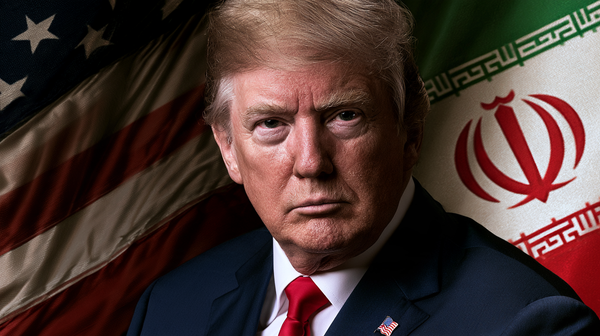
Iran Ceasefire Offer
Rejected
Post-Election Strike Plan
After Nov 3
In freight, when a shipper offers a partial reopening of a contested lane — open for seven days, inspect on day six, renegotiate on day seven — and the carrier rejects it, there is only one professional interpretation: the carrier believes its leverage position is strong enough that accepting any partial concession would weaken its hand in the full negotiation. The carrier is not rejecting the outcome. It is rejecting the sequence. Iran offered a seven-day ceasefire plan: the Strait of Hormuz opens on day six, nuclear talks resume on day seven, in exchange for the U.S. lifting the naval blockade, unfreezing Iranian assets, and removing sanctions. On Saturday, Trump told reporters he rejected the proposal because Iran is "losing badly." The reasoning is the carrier's reasoning: accepting a partial deal when the other side is losing is how you lose a negotiation you were winning.
The day before Trump's public rejection, the Wall Street Journal reported — citing anonymous officials — that Trump told aides he plans to resume strikes after November 3. The scale is not determined. The plan is described as contingent and subject to change. The factor currently preventing a large-scale operation is not political calculation — it is ammunition supply constraints. The U.S. has drawn down precision munitions inventories significantly during 206 days of operations, and resupply timelines from domestic production and allied stockpiles are running into industrial capacity limits. The WSJ sourcing is two anonymous officials. A plan described by anonymous officials as not yet determined and subject to change is not a plan — it is a disposition. The disposition is toward resumed strikes after the election.
For the pre-retiree, the rejection of Iran's seven-day plan and the WSJ post-election strike reporting together close the pre-November 4 deal window more definitively than Dennis Ross's 30% estimate suggested last week. The 70% scenario — no deal before elections — is now the operating assumption. Oil at $107.80 stays loaded into October CPI. The December Fed hike signal from the Dot Plot remains intact. The question for your bond fund, your HELOC payment, and your 401(k) allocation is no longer whether the rate environment stays elevated through the election. It is what happens to the war and oil after November 3 — and what that means for December.
Sponsored
Your Kids Could Owe More in 2026 Than You Think!
The 2026 inheritance shift has already begun.
Right now, estate tax exemptions are unusually high, nearly $15 million per individual.
Sounds generous.
But here's what most families don't realize…
That number isn't permanent.
And even if you're under it your heirs could still lose control, privacy, or flexibility without the right structure in place.
When exemptions reset… the window closes.
And once assets are locked inside traditional financial systems, your family may inherit paperwork, delays, exposure and taxes you thought you avoided.
Here's what smart families are doing instead:
✅ Moving a portion of wealth into privately held real assets
✅ Structuring transfers outside traditional brokerage pipelines
✅ Positioning before 2026 resets the rules
✅ Reducing visibility while increasing control
Because passing wealth isn't just about the IRS.
It's about leverage. Privacy. Timing.
A new FREE Inheritance & Wealth Transfer Guide just broke down what families are quietly doing right now to prepare for 2026.
It shows:
• How current exemption laws actually work
• What may change and how fast
• Why tangible assets are being reconsidered
• How to position before policy shifts
Get access here before planning season accelerates »
Once 2026 hits, reactive planning gets expensive.
Proactive planning builds legacy.
Claim your FREE guide now »
P.S. Most families assume their estate plan is "done."
2026 may prove otherwise.
See what's changing before your heirs do.
The Inefficiency Leak — Deconstructing the Rejection and the WSJ Report
Iran's Seven-Day Plan — What Was Actually Being Offered
Iran's proposal had a specific structure: a seven-day ceasefire sequence with Hormuz opening on day six and nuclear talks beginning on day seven. In exchange: U.S. lifts the naval blockade, unfreezes Iranian assets, removes sanctions. The structure — Hormuz on day six rather than day one — is significant. It means Iran was not offering to open the strait immediately in exchange for blockade relief. It was offering a six-day delay in the most valuable concession, presumably to see whether the U.S. followed through on its obligations before fully delivering. From the U.S. perspective, that sequence means giving up the blockade and the assets before Iran delivers the thing that most directly affects global oil prices. Trump's rejection — "losing badly" — reflects the same sequencing objection: accepting Iran's terms means moving first on the things that cost the U.S. the most leverage before Iran delivers the thing that resolves the oil market.
The Ammunition Constraint — Why the Post-Election Strike Has a Real Ceiling
The WSJ's anonymous officials identified the factor currently preventing a large-scale operation: ammunition supply. After 206 days of precision strike operations, U.S. inventories of the munitions used in Iran operations — JDAM-ER extended-range guided bombs, Tomahawk cruise missiles, and JSOW glide weapons — have been drawn down significantly. Domestic production capacity for these systems is constrained by industrial base limits: Raytheon's Tomahawk production line runs at approximately 200 units per month, well below the consumption rate of a major sustained operation. Allied stockpile transfers (from Israel, the UK, and Australia) partially offset the shortfall, but the net result is that a large-scale resumption of operations is constrained by logistics, not just political will. This is the freight auditor's most important data point: the rate of fire that the WSJ sources describe as planned for post-November 3 is bounded by what the supply chain can actually deliver.
"Losing Badly" — The Leverage Calculation Behind the Public Rejection
Trump's public statement — rejecting the deal because Iran is "losing badly" — is not just a characterization of Iran's military position. It is a public signal to Tehran that the U.S. does not feel pressure to accept the current terms. Public rejection is different from private rejection: by stating it publicly to reporters, Trump made it harder for his own team to return to the table quickly without appearing to have reversed position. The public rejection also signals to Gulf state allies — who hold the real veto over escalation — that the U.S. is confident enough in its leverage position to turn down a partial deal. If the Saudis and Qataris conclude that the U.S. is committed to continuing the blockade until Iran's full capitulation, they have to decide whether that outcome is better or worse for their oil infrastructure risk than the partial deal Iran was offering. That calculation — not what Trump said to reporters — is what determines whether the rejection holds.
Post-November 3 Strikes — Three Scenarios and What Each Does to Oil
The WSJ's post-election strike reporting is sourced anonymously and described as subject to change. But the three post-election scenarios have defined oil price trajectories. Scenario A: Limited strikes targeting specific Iranian military or nuclear infrastructure, no Gulf escalation — Brent moves to $115–125 on supply disruption concern, pulls back partially as markets assess damage. Scenario B: Large-scale resumed operations targeting economic and military infrastructure — Brent moves toward $130–145, Saudi retaliation risk pricing increases, Fed rate path becomes significantly more aggressive. Scenario C: Post-election deal, no strikes — Brent falls toward $85–90 as Iranian supply returns and Hormuz normalizes, December Fed hike probability drops sharply. The ammunition constraint identified by WSJ sources caps Scenario B: a large-scale operation is logistics-constrained. The most probable post-election scenario, given the munitions inventory situation, is Scenario A — targeted operations at a sustainable tempo, not the full-scale resumption the "losing badly" language implies.
Fact-Check Conclusion:
Iran's seven-day ceasefire plan — Hormuz opens day six, nuclear talks day seven, in exchange for blockade lift, asset freeze, sanctions removal: confirmed Reuters/Bloomberg reporting. Trump public rejection Saturday, stated Iran "losing badly": confirmed Trump remarks to reporters per multiple outlets. WSJ report — Trump told aides plans to resume strikes after November 3: confirmed WSJ, sourced to anonymous officials. Scale undetermined, plan subject to change: confirmed WSJ sourcing. Ammunition supply constraints currently preventing large-scale operation: confirmed WSJ anonymous official sourcing. Post-election disposition toward strikes described as contingent: confirmed WSJ.
Post-November 3 Scenarios — Oil Price and Rate Impact
Scenario A — Limited targeted strikes (most probable given ammo constraints)
December Fed hike
Certain + 2027 path higher
Bond fund impact
Additional −1.5–2.5% NAV
Scenario B — Large-scale resumed operations (constrained by ammunition supply)
December Fed hike
Certain + aggressive 2027 path
Bond fund impact
Severe NAV pressure
Scenario C — Post-election deal (Iran rejected, but still possible)
December Fed hike
Probability drops sharply
Bond fund impact
NAV rally 1.5–2.0% in session
Scenario A most probable given WSJ-reported ammunition constraints. Scenario C still possible despite Saturday rejection. Not financial advice.
The Arbitrage Alert — Planning Around the Post-Election Window
The Pre-Election Window Is Now Closed — Plan Accordingly:
Trump's public rejection of Iran's seven-day plan closes the pre-election deal window more definitively than any anonymous-source framework discussion opened it. The 70% scenario Dennis Ross described last week — no deal before November 4 — is now the operating assumption. October CPI, releasing October 9, will capture September's full $107 oil. December hike probability is not coming down before the election. If you are holding long-duration bonds in a 401(k) or IRA, the next 38 days do not produce a rate relief event. The pre-election window is closed. Plan around the post-election window instead.
The Ammunition Clock — What the Logistics Constraint Means for Post-Election Oil:
The WSJ's ammunition supply constraint is the most consequential detail in the post-election strike reporting. It means that even if Trump resumes operations after November 3, the scale of those operations is logistics-bounded. A logistics-bounded operation produces Scenario A oil pricing ($115–125) rather than Scenario B ($130–145). The difference between those two scenarios for your bond fund is approximately 0.8–1.2% additional NAV pressure. For your HELOC, the difference between Scenario A and Scenario B inflation loading is roughly one additional Fed hike in 2027. The logistics constraint is not a minor footnote — it is the ceiling on the worst-case oil scenario for the post-election period.
October 9 CPI — The Last Major Data Point Before the Election:
September CPI releases October 9 — 26 days before the election, 19 days before the October 28 FOMC meeting. September CPI captures a full month of $107+ Brent. A September CPI print at 3.5% or above reinforces the December hike signal and makes the October 28 FOMC hold-with-hawkish-language outcome more certain. A print below 3.2% — which would require oil to have pulled back in September, which it did not — would be a surprise. With Iran's deal rejected and the post-election strike disposition confirmed by WSJ, there is no oil-price shock coming between now and October 9. September CPI is going to be elevated. Plan on it.
The BS-Meter — Headlines vs. The Fine Print
The Headline
"Trump Rejects Peace Deal — War Will Escalate Immediately"
The Fine Print
Trump rejected a specific seven-day partial ceasefire proposal. He did not announce new strikes. The WSJ reported a post-election strike disposition — sourced anonymously, described as undetermined in scale and subject to change. The factor currently preventing large-scale operations is ammunition supply, not political decision. Brent at $107.80 is not pricing immediate escalation. It is pricing continued stalemate.
The Headline
"Iran Was Offering a Real Peace Deal — Trump Blew It"
The Fine Print
Iran's seven-day plan required the U.S. to lift the naval blockade, unfreeze assets, and remove sanctions before Hormuz opened on day six. That is a sequencing in which the U.S. gives up its primary leverage instruments before Iran delivers the thing that resolves the oil market. A "real peace deal" does not ask the stronger party to disarm first. Iran's proposal was a negotiating opening, not a surrender document. Trump's rejection reflects a leverage calculation, not a refusal to negotiate.
The Headline
"WSJ Says Trump Plans to Bomb Iran After the Election — It's Confirmed"
The Fine Print
The WSJ report is sourced to anonymous officials. The plan is described as undetermined in scale and subject to change. The current constraint on large-scale operations is ammunition supply, not political will. "Plans to resume strikes" describes a disposition, not an order. Anonymous official sourcing in a wartime context describes one version of internal discussions — not a final decision, not a timetable, and not a commitment that survives contact with post-election circumstances.
The Backhaul Index: Weekend Snapshot
❌ Iran Deal Status
Rejected Seven-day plan · Trump: Iran "losing badly"
Pre-election deal window now closed. 70% scenario (no deal before November 4) is the operating assumption. Plan around it, not against it.
📰 WSJ Post-Election Strikes
After Nov 3 Anonymous officials · Scale undetermined · Subject to change
Disposition, not a plan. Ammunition supply currently limits large-scale operations. Most probable post-election scenario: Scenario A (targeted, logistics-bounded) rather than Scenario B (large-scale).
🛢️ Brent Crude
$107.80 Stalemate price · Not pricing escalation or resolution
Stays elevated through October CPI (Oct 9). December hike signal from Dot Plot intact. No oil-price shock coming between now and the election.
📅 Next Hard Date
October 9 September CPI · Will be elevated · December hike confirmed
September captured full month of $107+ oil. No deal happened to change that. October 9 CPI print sets the FOMC's October 28 tone and December hike probability for the rest of the year.
The Wire: What the Rejection Actually Closes
The Post-Election Window — What Changes After November 3 That Doesn't Change Before It
Four things change after November 3 that constrain the decision space before it. First: the electoral constraint on U.S. military action is removed. Trump no longer has to calculate how a strike looks 38 days before an election. Second: Iran sees the election result. If Republicans hold the House and Senate, Iran's calculus about U.S. staying power changes. If Democrats make gains, Iran's calculation about Trump's domestic vulnerability shifts. Third: the FOMC December meeting is on December 8–9 — after the election, after the post-election operational decision window, and before the January 10 China trade truce expiry. The December meeting will have October and November CPI in hand — and if oil moves post-election, those prints will reflect it. Fourth: the ammunition resupply timeline. By late November, the U.S. will have had two months of production and allied transfer to rebuild depleted inventories. The logistics constraint that limits Scenario B today becomes less binding by December. After November 3, more options become available simultaneously — and the decisions made in that window will set the financial variables for the first quarter of 2027.
The freight auditor's job is to know what is in the container before it moves. Right now, the container is sitting on the dock labeled "post-election." We know roughly what is in it: a strike disposition, an ammunition resupply timeline, an Iran that just had its partial deal rejected, a China trade truce expiring January 10, and a Federal Reserve that has already told you December is live. The container opens November 3. The contents don't change between now and then. What changes is who gets to decide what to do with them.
AC
Art Callahan · Ex-logistics auditor, The Backhaul Report