
Tech had one of its worst sessions in months. The Nasdaq-100 fell 2.9% to 28,970, dragged down by rising financing costs and a market that has finally started asking whether the massive bets on AI will pay off fast enough to justify the debt behind them. SpaceX led the damage with a 9.1% drop — just two days after a strong quarterly report. The bond market told the other side of the story: the 10-year yield fell nearly 20 basis points to 4.95% as money left equities and moved into Treasuries. Futures are slightly negative again this morning.
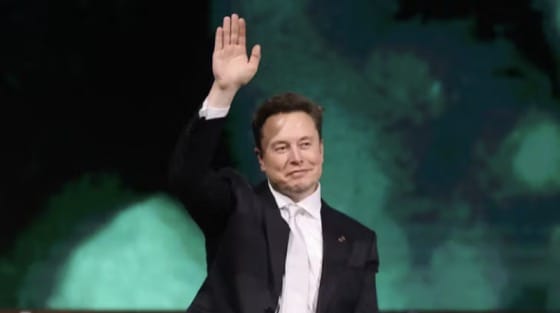
Elon Musk brought out his humanoid robot…
It danced. It waved. It made headlines.
But that's not what should've caught your eye.
Because right after the show, he revealed something bigger. A quiet move the media barely touched… but insiders are whispering it could be his next Tesla-level explosion.
The robot? That was the distraction.
This is the real play — and it's already in motion. Before the talking heads catch up… watch the video that slipped past 99% of the world.
Elon already knows where this is going…
Do you?
Click here to see what's really happening »
Sincerely,
Victoria Tino, Director
Behind the Markets
SpaceX's 9.1% drop is the number that stings most, because it came two days after a strong earnings report. The company posted solid revenue growth — Starlink subscriber counts continued to climb, and the launch cadence held up. None of that changed Thursday. What changed was the broader market's patience with the financing story. SpaceX carries a significant debt load tied to its infrastructure buildout — launch facilities, satellite production, ground stations — and when rates stay elevated, every leveraged growth story gets repriced regardless of the underlying operating performance. Good earnings are not a defense when the market is re-examining the capital structure.
The S&P 500's 1.2% decline was more contained, but the Nasdaq-100's 2.9% loss shows where the pain concentrated. High-growth tech — the names that rely most on capital markets to fund their plans — took the hardest hit. The rotation out of equities was unambiguous: the 10-year Treasury yield falling nearly 20 basis points in a single session is the bond market equivalent of a crowded exit. When institutional money moves that fast into Treasuries, it is usually a flight, not a reallocation.
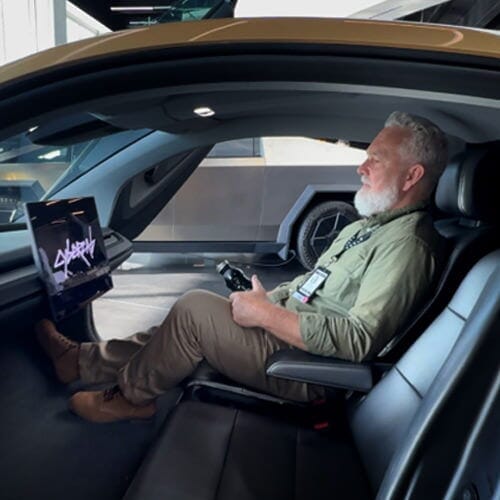
This man just got inside a Cybercab, Elon Musk's new car that has no steering wheel or pedals.
What happens next will shock everyone. Click here to see this exclusive footage.
The AI spending debate has now moved from a quarterly-earnings question to a rate-sensitivity question. When the concern was "will hyperscaler AI capex hold up," the answer was trackable — you waited for Microsoft, Amazon, and Alphabet earnings and updated your view. The current concern is structural: at 4.95% on the 10-year, the discount rate applied to future cash flows is high enough that even companies with real revenue growth look less attractive on a present-value basis. That math does not improve until rates move, and rates are not moving soon.
The resolution comes from earnings, not from yesterday's price action. Microsoft, Amazon, and Alphabet all report next week. Their data center spending guidance is the single most important input for whether Thursday's selloff in AI infrastructure names is a repricing or a rout. Strong, confident capex numbers stabilize SpaceX and its peers. Hedged or reduced guidance accelerates the selling.
AUTOCAMP
THE BRAND BUILDING OUTDOOR HOSPITALITY
AutoCamp brings hotel-level comfort to iconic outdoor destinations — and is scaling a category major hotel groups are increasingly entering.
WHY THIS CATEGORY MATTERS
THE AUTOCAMP DIFFERENCE
THE GROWTH CASE
HILTON HONORS ADVENTURES
AutoCamp is one of two launch partners for Hilton Honors Adventures.
200M+ Hilton Honors members can book and earn points at AutoCamp. Direct bookings through Hilton are up 30% year over year.
INVESTMENT
INVEST IN THE NEXT CHAPTER
Invest in the brand building the bridge between outdoor travel and modern hospitality.
Deadline to invest: Thursday, October 29.
INVEST AT $9.10 BEFORE 10/29 →This is a paid advertisement for AutoCamp Regulation Crowdfunding offering. Please read the offering circular at invest.autocamp.com
"I've been watching this setup develop for about six weeks. The AI trade has always had two parts: the software layer, which is asset-light and generates cash, and the infrastructure layer, which requires enormous capital financed with debt. The market treated them the same for three years. Thursday is the market starting to treat them differently. For a pre-retiree, the practical question is which bucket your tech exposure is in. If you've been overweight infrastructure names chasing last year's gains, Thursday was expensive and next week could be more of the same. The bond market move Thursday was not noise. Twenty basis points on the 10-year in one session is a signal. I'd listen to it."
Nasdaq-100 and S&P 500 closing data: Bloomberg and CME Group, October 22, 2026. Nasdaq-100 closed at 28,970, S&P 500 −1.2%.
SpaceX share price movement: Secondary market trading data. SpaceX Q3 2026 earnings release, October 20, 2026.
10-year Treasury yield: U.S. Department of the Treasury, intraday data October 22, 2026. Yield fell approximately 20 basis points to 4.95%.
Futures data: CME Group, morning October 23, 2026. Nasdaq-100 futures slightly negative.
Rate sensitivity analysis and hyperscaler capex estimates: Goldman Sachs and Morgan Stanley equity research notes, October 2026.