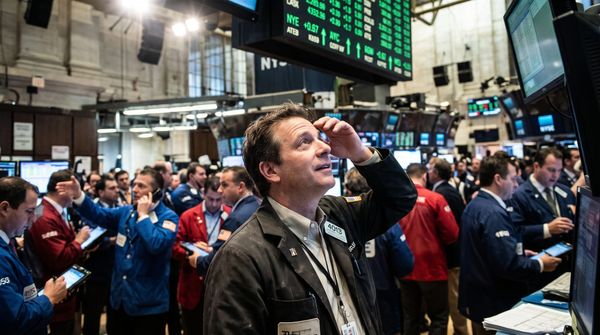
Brent fell to $103 Friday morning. Trump said there will be no Iran strike. China started shipping petroleum products again. The market moved on both — down about 1.3% — even though a hurricane simultaneously shut in 62.9% of Gulf of Mexico production. If that number doesn't make your head tilt, it should.
In 1971, the global monetary system severed its link to gold, resetting the rules of wealth for 52 years.
Now, without a single vote from Congress or a public debate, history is repeating itself.
President Trump has, according to Porter, set Executive Order 14241 into motion in a way Porter says is changing the rules behind the U.S. dollar.
More than 60 nations are already moving into position to support this new framework.
This isn't about switching to crypto or digital central bank tokens.
It is a complete overhaul that anchors the power of American currency directly to physical, high-tech chokepoints: critical minerals, domestic energy, and AI infrastructure.
When a 52-year monetary order resets, a sharp divide opens up instantly:
- Paper dollar holders: Who watch traditional cash reserves quietly lose purchasing power as the old rules expire.
- Physical asset owners: Who position themselves in front of the multi-trillion-dollar institutional pivot.
Financial analyst Porter Stansberry has just released an emergency briefing detailing this transition.
More importantly, he reveals the exact names and ticker symbols of 5 critical companies sitting directly at the chokepoints of this new monetary system.
Including his #1 stock idea to consider before Wall Street completes its positioning.
Watch Porter Stansberry's urgent briefing and unlock the 5 tickers immediately
On Thursday, Trump told reporters there would be no large-scale U.S. military strike on Iran — a direct reversal of the planning language that had been driving oil prices all week. The Atlantic had reported Wednesday that the White House asked the Pentagon for strike options; Trump's statement effectively closed that pre-election window. The market moved immediately. Brent, which had been holding above $107 on strike-risk premium, gave back roughly $4 in two sessions.
Simultaneously, China lifted restrictions on petroleum product exports that had been in place since earlier this year. Chinese refineries, which had been holding product domestically as a buffer against war-driven supply disruption, began clearing inventories for international shipment. That additional supply signal — arriving alongside the geopolitical de-escalation — compounded the downward pressure on price.
Brent is now at $103.20. WTI at $90.50. The strike premium that had been embedded in every oil price print this week has been partially unwound in 48 hours.
In case you missed it...
...make sure you get your free "Simple Options Trading For Beginners" book before your link expires.

I eventually plan to charge money for this training, so do yourself a favor and download it now...
That way, no matter what it costs in the future, you'll have a free copy.
Sound good?
FREE: Simple Options Trading For Beginners << Get It Now
Good Trading,
Bill Poulos
p.s. Go here to save a copy of your "Simple Options Trading For Beginners" book while it's still free.
This week opened with a 29,000 jobs print, a red diesel executive order, and $90 Medicare checks all pointing toward a softer December rate environment. Then the Iran strike planning story broke and temporarily reversed the direction. Now oil is at $103 — with a hurricane taking out 63% of Gulf output — and the market is still going down. That is the Iran risk premium talking, not the supply data.
The December Fed meeting is now looking at a September CPI distorted by $107 oil and an October CPI that will be written by $103 oil. If Brent holds below $105 through the end of October, the October inflation print does the Fed's work for them. The hurricane production outage doesn't change that math. It resolves in days. The question is whether Trump's no-strike statement holds — or whether it's the same kind of leverage move that produced the Wednesday planning story in the first place.
"I've seen storms shut down half a port overnight. Cargo doesn't move, demurrage ticks up, everybody panics. Then the storm passes and in 48 hours you can't tell anything happened. What you can't undo is a dock fire — the kind that takes the whole terminal offline for a year. The Gulf hurricane is a storm. The Strait of Hormuz was a dock fire risk. Markets knew the difference. That's why oil went down."
Confirmed: Brent crude -1.3%, trading at $103.20; WTI at $90.50 (Oct 9 morning session). Trump stated no large-scale U.S. military strike on Iran (public statement, Oct 9). China lifted petroleum product export restrictions; refineries resuming international shipments (Bloomberg Law, Reuters). Gulf of Mexico hurricane shut-in: approximately 1.3 million barrels/day, 62.9% of regional production (BSEE).
Context: September CPI released Oct 8 — elevated, written by $107 Brent. October CPI (Nov 12) will reflect current $103 environment if oil holds. Qatar diplomatic channel remains active. USS Theodore Roosevelt in transit, estimated arrival late November. December Fed meeting: December 8.