In logistics, a rate quote without a pickup date, a carrier assignment, and a confirmed capacity is not a rate quote — it is a number written on a napkin. It may become real. It may not. The professional response is to note it, ask for the operational details, and reserve judgment until the paperwork exists. Trump's $5,000 dividend announcement at the Dallas Republican convention on Wednesday is the political equivalent of a napkin rate quote: a large number, a conditional trigger, a vague funding source, and no operational mechanism. The number is real. The speech was real. The 21,000 people in the American Airlines Center were real. The $1.35 trillion it would cost — at $5,000 for each of approximately 270 million American adults — is also real. Everything else requires the paperwork that does not yet exist.
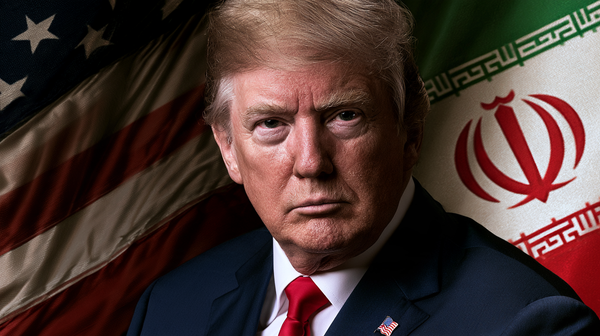
At the first-ever Republican pre-midterm convention in Dallas, Trump delivered a speech approaching two hours that contained the most financially significant midterm promise of any president in modern history: "I will pay a $5,000 dividend to every adult American citizen — if Republicans win." The condition is explicit: GOP retention of the House and Senate in November. The requirement attached to the payment is that the money must be spent inside the United States. The proposed funding source is tariff revenue. The legal mechanism for executing the payment is unspecified. Trump also delivered two additional statements that moved markets independently: a promise that "oil will collapse immediately after the election," and a warning that "Iran is waiting for the weak ones" — a signal that the current conflict posture is calibrated to the electoral calendar.
The arithmetic is straightforward and the implications are not. At 270 million adult Americans, $5,000 per person equals $1.35 trillion — approximately 19% of the annual federal budget, roughly equivalent to the entire Medicaid program, and approximately four times the projected annual tariff revenue that the administration has cited as its primary new revenue source. The U.S. collected approximately $320–$350 billion in tariff revenue in the current fiscal year — a record, but still $1 trillion short of funding a single $5,000 payment to every adult American. The math does not close without either deficit spending, additional revenue sources, or a substantial reduction in the per-payment amount or eligible population. None of those details were provided in Dallas.
Sponsored
BREAKING: President Trump announces that he will be paying a "tariff dividend" of at least $2,000 per person.
Stimulus checks are officially back
But why now?
✅ Recent market crashes
✅ Skyrocketing inflation
✅ A weak US dollar
This isn't just a "bonus" — it's a chance to shield your savings from what's coming.
And while Washington hands out checks, the people who act before the next wave hits could be the only ones that protect their hard earned savings!
It's fast, no cost, and could be the smartest move you make this year.
Claim My Free Guide Before the Checks Hit »
P.S. Once those checks start rolling out, this opportunity to protect your savings may slam shut!
Claim My FREE Guide →
The Inefficiency Leak — Deconstructing the $5,000 Dividend
Dallas Convention: 21,000 Attendees — First Republican Pre-Midterm Convention in History
American Airlines Center capacity event. Two-hour speech. Unprecedented format for a midterm election cycle.
▼
"$5,000 Dividend to Every Adult American — If Republicans Win"
Conditional on GOP November victory. Must be spent in the U.S. Funded by tariff revenue — unspecified legal mechanism.
▼
Cost at 270 Million Adults: $1.35 Trillion — 19% of Annual Federal Budget
~4x annual tariff revenue. Equivalent to the entire Medicaid program. Legal and legislative pathway undefined.
▼
"Oil Will Collapse After the Election" + "Iran Waiting for the Weak Ones"
Two additional market-moving statements: a gasoline price promise tied to electoral outcome, and a signal that Iran conflict posture is election-calendar dependent.
▼
The Funding Gap: $1.35 Trillion Promised vs. $320–350 Billion in Annual Tariff Revenue
The math does not close without deficit spending, additional revenue sources, or significant reductions in scope. None were specified in Dallas.
1.
The Tariff Revenue Gap — Where the $1 Trillion Shortfall Comes From:
The administration has positioned tariff revenue as the primary funding source for the dividend. The U.S. collected approximately $320–$350 billion in tariff revenue in the current fiscal year — a record level reflecting the broad tariff regime imposed since 2025. At $5,000 per adult, the total cost is $1.35 trillion. The gap is approximately $1 trillion. Closing that gap through tariffs alone would require tripling current tariff collection — which would require either dramatically higher tariff rates on existing categories, tariffs extended to categories currently exempt (including Canada's oil and gas, currently excluded from counter-tariffs), or a global trade volume expansion that increases the taxable base. None of those paths are available in a single fiscal year. The alternative is deficit financing — borrowing the $1 trillion, which adds directly to the $40 trillion debt load that the U.S. already carries at 5.31% on the 30-year Treasury.
2.
The Legal Mechanism Problem — Congress Controls Appropriations:
The President of the United States cannot unilaterally distribute $1.35 trillion to American citizens. Article I of the Constitution gives Congress the power of the purse — all federal expenditures require Congressional appropriation. A $5,000 dividend payment to every adult American would require either a standalone appropriations bill passed by both chambers, or inclusion in a reconciliation package that can pass the Senate with 51 votes. The December 11 government funding deadline — already carrying the reconciliation package, the defense authorization bill, and the farm bill — would need to absorb a $1.35 trillion additional appropriation. The House Freedom Caucus, which voted against the CR last week, has consistently opposed deficit spending. The legislative math for a $1.35 trillion dividend payment through the current Congress is, at minimum, extremely complicated.
3.
"Oil Will Collapse After the Election" — The Market Test:
Trump's statement that oil prices will collapse immediately after the election is a forward guidance claim with two possible interpretations. First interpretation: the administration has a specific policy action planned post-election — releasing strategic petroleum reserves at scale, negotiating an Iran settlement that reopens Hormuz, pressuring OPEC+ for production increases — that would materially increase oil supply. Second interpretation: the statement is electoral messaging designed to encourage voters to wait for post-election price relief rather than punishing incumbents for current $99 oil. The oil futures market, which prices supply and demand rather than political promises, was trading Brent near $100 after the speech. If the market believed the "oil collapse" claim, futures prices would have fallen on the statement. They did not. The market is treating it as interpretation two.
4.
"Iran Is Waiting for the Weak Ones" — The Election-Conflict Linkage:
Trump's Iran statement at Dallas is the most geopolitically significant element of the speech for portfolio purposes, because it explicitly links the conflict's intensity to the electoral outcome. The statement implies that the current military posture — eight tankers destroyed in four days, Hormuz at six ships per day, Brent at $99 — is what a strong Republican foreign policy looks like, and that a Democratic win would produce a weaker posture that Iran is "waiting for." This framing creates a specific market expectation: if Republicans retain Congress, the current conflict posture continues or intensifies; if Democrats win, a negotiated settlement becomes more likely, Hormuz reopens, and oil prices fall. The "oil collapse after the election" promise and the "Iran waiting for the weak ones" warning are the same statement from two different angles — one economic, one geopolitical.
Fact-Check Conclusion:
The Dallas convention (American Airlines Center, 21,000 attendees) and Trump's speech are confirmed public events. The $5,000 dividend pledge, "spend in America" requirement, tariff revenue funding reference, oil collapse promise, and Iran statement are confirmed from speech transcript reporting. The $1.35 trillion cost calculation: 270 million U.S. adults × $5,000 = $1.35 trillion — standard arithmetic confirmed. Annual federal budget approximately $7 trillion (FY2026 OMB estimate), making $1.35 trillion approximately 19%. Annual tariff revenue $320–$350 billion: confirmed from U.S. Customs and Border Protection data. No legal mechanism for the dividend was specified in the speech — absence of specification confirmed across multiple speech transcript sources.
The Arbitrage Alert — What the $5,000 Promise Actually Moves
•
The Midterm Electoral Calculus — What $5,000 Is Designed to Do:
The dividend promise functions as a conditional get-out-the-vote mechanism — it gives every eligible voter a personal financial stake in the Republican midterm outcome. At $5,000 per adult, the average American household of 1.8 adults receives an implied $9,000 promise. That number is large enough to influence voting behavior among households who believe the promise is real and deliverable. The promise does not need to be legally executable to affect the November 4 vote — it needs to be believed by enough swing-district voters to move close races. In districts decided by 2–5 percentage points, a credible $5,000 promise is a significant electoral input regardless of its fiscal viability.
•
The Inflation Consequence — $1.35 Trillion in Consumer Spending:
If the dividend were actually paid — a significant conditional — $1.35 trillion injected into consumer spending in a single payment would produce an immediate and substantial inflationary shock. The 2021 stimulus checks ($1,400 per person) contributed measurably to the inflation surge that reached 9.1% by mid-2022. A $5,000 payment — 3.6x larger — with a "spend in America" requirement designed to maximize domestic demand would, by standard economic modeling, add 3–5 percentage points to CPI within 12 months of payment. At the current PCE baseline of 3.7%, that implies an inflation environment of 6.7–8.7% — well above 2022 peak levels. The payment that promises economic relief would, if executed, create an inflation shock that makes today's financial conditions look benign.
•
The Bond Market's Read — 30-Year Yield After the Speech:
Bond markets price fiscal promises even before they are legally enacted. The 30-year Treasury yield at 5.31% already reflects the market's assessment of U.S. fiscal trajectory — $40 trillion in debt, $1 trillion in annual interest expense, and a December reconciliation fight that has not resolved the $95 billion package. A credible $1.35 trillion additional spending promise, funded by a tariff revenue source that covers approximately 25 cents per dollar, would add material upward pressure to long-term Treasury yields. If bond markets begin pricing the Dallas promise as a real fiscal commitment — rather than campaign rhetoric — the 30-year yield has room to move toward 5.5–5.75%, which adds another 0.25–0.5% to 30-year mortgage rates from their already-elevated levels.
The BS-Meter — Headlines vs. The Fine Print
The Headline: "Trump Promises $5,000 to Every American — Historic Economic Relief"
The Fine Print: A promise made at a campaign rally, conditioned on an electoral outcome, with no specified legal mechanism, funded by a revenue source that covers 25 cents per dollar of the stated cost, is not economic relief — it is a campaign promise. The distance between a Dallas speech and a Treasury disbursement is measured in Congressional votes, appropriations bills, legal authority, and fiscal arithmetic. "Historic" is accurate only as a description of the size of the number. The operational pathway from the number to a check is undefined.
The Headline: "Tariffs Will Pay for It — Revenue Already Coming In"
The Fine Print: Annual tariff revenue is approximately $320–$350 billion. The dividend costs $1.35 trillion. The gap is approximately $1 trillion. To close that gap with tariff revenue alone in a single year would require collecting $1.35 trillion in tariffs — which implies a tariff rate and trade volume combination that would cause a demand collapse severe enough to reduce the trade flows being taxed. Tariff revenue has a Laffer curve: at high enough rates, imports fall and revenue falls with them. The math of tariff-funded $1.35 trillion in payments does not close under standard economic modeling.
The Headline: "$5,000 Will Stimulate the Economy — Spend-in-America Requirement Is Smart Policy"
The Fine Print: The 2021 stimulus checks — $1,400 per person — contributed materially to the inflation surge that reached 9.1% by mid-2022 and required three years of rate hikes to control. A $5,000 payment with a mandatory domestic spending requirement is designed to maximize demand stimulus — which means it is also maximizing the inflationary impact of the payment. "Stimulate the economy" and "add 3–5 points to CPI" are the same statement. Which headline you run depends on which consequence you are describing.
The Backhaul Index: Tonight's Macro Indicators
💵 Proposed Dividend — Total Cost
$1.35 Trillion (19% of Federal Budget)
270 million adults × $5,000. Roughly equivalent to the entire Medicaid program. Approximately 4x annual tariff revenue. No legal mechanism specified. Requires Congressional appropriation — which requires votes that do not yet exist.
📊 Annual Tariff Revenue — Current
$320–350 Billion — Record Level
Covers approximately 25 cents per dollar of the dividend cost. The $1 trillion funding gap requires either deficit spending, dramatic tariff rate increases, or a significant reduction in the payment amount or eligible population.
📈 Projected CPI Impact If Paid
+3–5 Percentage Points Within 12 Months
Based on 2021 stimulus precedent scaled to payment size. The 2021 $1,400 checks contributed to a 9.1% inflation peak. A $5,000 payment — 3.6x larger with a mandatory domestic spend requirement — implies an inflation environment of 6.7–8.7% within 12 months of payment.
🏛️ Dallas Convention Attendance
21,000 — First Republican Pre-Midterm Convention
American Airlines Center capacity event. Nearly two-hour speech. Unprecedented format for a midterm cycle — signals the administration is treating November as a structural electoral moment, not a standard off-year election.
The Wire: Daily Topics & Analysis
The Electoral Mechanism — How a Promise That Cannot Be Kept Can Still Win Elections
Political economy research on electoral promises consistently finds that voters weight the nominal value of a promise more heavily than its probability of delivery in the short-term electoral window. A $5,000 promise, stated plainly at a nationally covered event, will be believed by a meaningful percentage of the electorate regardless of the fiscal arithmetic — because the belief calculus operates on emotional response to the number rather than CBO scoring of the mechanism. In swing districts decided by 2–5 points, even a 10–15% belief rate among independent voters is sufficient to move electoral outcomes. The promise does not need to be delivered to affect the vote. It needs to be believed by enough people for long enough to change their November 4 behavior. That is a lower bar than fiscal viability.
Art's Take: In 30 years of auditing freight contracts, I never saw a carrier promise a rate that the math could not support and then actually deliver it. But I saw plenty of carriers win business with that promise and figure out the math later — or not at all. The $5,000 dividend is a bid to win the contract. The delivery problem comes after November 4. The question for voters is whether they want to sign the contract before seeing the operational plan.
The "Oil Collapses After Election" Promise — What It Would Require
For oil to "collapse immediately after the election" — from $99 toward, say, $70 — one or more of the following would need to occur within days of November 4: a ceasefire or settlement with Iran that reopens Hormuz to normal commercial traffic, a coordinated OPEC+ production increase of 2–3 million barrels per day, a strategic petroleum reserve release of unprecedented scale, or a global demand shock severe enough to overwhelm supply constraints. The first option — Iran settlement — is the only one that addresses the primary supply disruption without creating other economic problems. An Iran settlement immediately post-election, combined with Hormuz reopening to 138 ships per day, would produce exactly the oil price collapse Trump promised. Whether that outcome is planned, possible, or merely promised is the question the oil futures market is currently pricing — at $99, with considerable skepticism.
Art's Take: "Iran is waiting for the weak ones" and "oil will collapse after the election" are the same deal, stated from two sides. The implicit offer is: vote Republican, keep the pressure on Iran, and Iran settles — oil falls. Vote Democratic, Iran gets what it was waiting for, and the leverage disappears. Whether that deal is real depends entirely on whether Iran is actually prepared to negotiate after a Republican win — a question that Iranian state media's public posture gives no reason to answer optimistically.