New Fed Funds Rate
3.75–4.0%
Trump's Target Rate
"1% or less"
The verdict is in. At 2:00 PM ET today, the Federal Open Market Committee voted 12–0 to raise the federal funds rate by 25 basis points — from 3.50–3.75% to 3.75–4.00%. It is the first rate hike since July 2023. It is the first unanimous FOMC vote of Kevin Warsh's chairmanship — and the most consequential one. The vote was not close. Every voting member of the committee, including those who had previously dissented to hold, lined up behind the hike. The data made the case too clearly to argue against. The market had priced 93% probability. The actual probability turned out to be 100%.
The Dow Jones Industrial Average closed down 614 points, or −1.18%, at 51,479. The selloff is the market absorbing the remaining 7% of unpriced hike risk plus the forward signal from the Dot Plot — which showed the median FOMC member projecting one additional hike in 2026, most likely at the December meeting. That dot — one more hike coming — moved the bond market. The 10-year Treasury, which had already crossed 5% intraday yesterday, did not fall on the confirmed hike. It held above 5% as the Dot Plot confirmed the rate cycle is not finished.
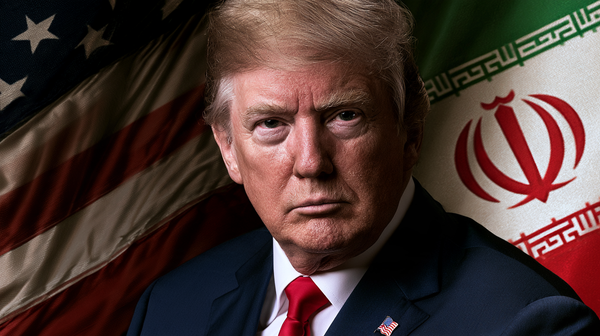
Trump responded within the hour. He said the rate should be "1% or lower" — a level not seen in the U.S. since 2004 outside of emergency pandemic conditions. He called the Fed board "hostile." He said he still trusts Warsh. The combination — institutional hostility plus personal trust for the man who just voted unanimously to hike against his wishes — is the clearest signal yet of where the Trump-Fed relationship stands entering the final stretch of the midterm cycle. The freight industry has a term for this: carrier-shipper détente. You disagree on price, you hate the invoice, but you still need the truck to show up.
Sponsored
Why's This NVIDIA Collaborator Robot Called Flippy? (Invest by 9/17)
We all see robots flipping on social media. But a french-fry robot named Flippy? That doesn't make sense.
Miso Robotics' share price jumps in days — September 17 is your last shot at today's price.
But ask restaurant operators in the $1T fast-food industry like White Castle who deploy Miso's Flippy Fry Station robot, and it sure makes a lot more sense.
Flippy FLIPS restaurant operators' bottom lines, helping boost a location's profits up to 4X.
And with Miso having a $4B/year US revenue opportunity for just the fry station alone and a special collaboration with NVIDIA, these french fries are way beyond small potatoes.
Right now — while everyone else is just talking about AI robots — Flippy is already flipping fries at White Castle, Jersey Mike's, and Cinnabon.
After Miso recently acquired two major new product assets, Flippy has become the star of a rapidly expanding ecosystem. Customers think of what Miso is building as the operating system for modern restaurants.
Miso just added big-name customers like Jersey Mike's and Cinnabon… and grew its patent portfolio by ~10X to 300+. Their robots even started entering college campuses, NBA arenas, and a new national burger chain.
Over 44,000 everyday investors have already claimed their stake.
This isn't a 'someday' — it's right now. After September 17, the $5.48 price is gone for good.
⏳ Days left. $5.48/share is a price you won't see again after 9/17. Get in while the window's still open. Get in while the window's still open.
Miso Robotics is offering securities through the use of an Offering Statement that has been qualified by the Securities and Exchange Commission under Tier II of Regulation A. A copy of the Final Offering Circular that forms a part of the Offering Statement may be obtained from: invest.misorobotics.com/
The Inefficiency Leak — Deconstructing What Just Happened
The 12–0 Vote — What Unanimity Signals That a Simple Hike Does Not
In July, the vote was 9–3 to hold — three members already wanted to hike. Today it was 12–0 to hike. The shift from 9–3 hold to 12–0 hike is not just a directional change — it is a signal about committee consensus. When the FOMC votes unanimously, it is communicating something the headline rate change cannot: there was no internal argument. No one on the committee had a credible data case for holding. The three July dissenters who voted for a hike were vindicated by the August data. The six members who voted to hold in July moved to hike today. Unanimity at this meeting carries a specific message: the inflation problem is real enough, and the data clear enough, that 12 people with 12 different economic models reached the same conclusion. That is not noise. That is signal.
The Dot Plot — One More Hike in 2026 Means December Is Live
The June Dot Plot showed the median member expecting rates to peak at 3.8% in 2026 — one hike total for the year. Today's Dot Plot shifted the median higher: one additional hike projected for 2026, pointing to a December move toward 4.00–4.25%. This is the market-moving document. The Dow fell 614 points not on the hike itself — that was 93% priced — but on the Dot Plot telling markets that rates are going higher again in December and that the rate cycle that began today has more runway. The October meeting, which concludes one week before midterm elections, remains a hold by strong convention. December is now the active meeting. The pre-retiree with a bond fund should understand that today's Dot Plot just extended the NAV pressure timeline from "one and done" to "two hikes in 2026."
Trump's "1% or Lower" — The Gap Between Political Preference and Economic Reality
Trump called for a rate of "1% or lower" within the hour of the decision. For context: the federal funds rate has been at or below 1% in only two periods in modern history — the post-2008 financial crisis recovery and the 2020–2022 pandemic emergency. Both were periods of near-zero inflation and economic emergency. The current environment has PCE inflation at 3.7% for six consecutive quarters, CPI at 3.4%, oil at $107, and an August jobs print of +162,000. A 1% fed funds rate in this environment would be the most stimulative monetary policy in U.S. history outside of a depression or pandemic. The gap between Trump's stated preference (1%) and the market's terminal rate pricing (~4.25–4.50% through 2027) is 325 basis points. That gap is not a political disagreement. It is an economic disagreement about what the current inflation environment requires.
"Hostile Board" + "I Trust Warsh" — The Contradiction That Defines the Next 49 Days
Trump's simultaneous statements — the Fed board is "hostile" AND he trusts Warsh — are not contradictory in Trump's framework. They are a classic Trump positioning move: attack the institution while maintaining the personal relationship with the individual at its head. This matters for the next 49 days of the midterm campaign because it sets up two possible narratives. If the economy weakens and markets sell off further, Trump has already established that the "hostile" Fed board is responsible. If the economy holds and inflation cools, Trump can credit his appointee Warsh for doing what was necessary. The framing gives Trump optionality. What it does not give him is a 1% rate. That is not coming regardless of how the midterms resolve.
Fact-Check Conclusion:
12–0 vote to hike 25bps from 3.50–3.75% to 3.75–4.00%: confirmed FOMC statement September 16. First hike since July 2023: confirmed Federal Reserve historical record. Dot Plot median showing one additional 2026 hike: confirmed FOMC SEP September 16. Dow Jones −614 points (−1.18%) to 51,479: confirmed market close data. Trump statement "1% or lower" and board "hostile": confirmed Trump post-decision remarks. Trump "still trusts Warsh": confirmed same remarks. July 2026 vote was 9–3 to hold: confirmed prior FOMC record.
What Changed Today — For Your Finances
Before Today — Rate 3.50–3.75%
HELOC $300K / month
~$1,575
12-month CD yield
~4.0–4.2%
Bond fund 7yr duration (NAV pressure)
Baseline
After Today — Rate 3.75–4.00% + December Hike Projected
HELOC $300K / month
~$1,625 (+$50)
12-month CD yield
~4.3–4.5% ↑ (good news for cash)
Bond fund 7yr duration (NAV pressure)
Additional −0.5–0.7% today
Estimates based on standard rate transmission. Not financial advice. CD rates update within 2–4 weeks.
The Arbitrage Alert — Three Things to Do Before Friday
1. Lock In Your CD Rate This Week — Before Banks Lag the Move:
Banks typically pass through 70–80% of Fed rate increases to CD and high-yield savings rates, but with a 2–4 week lag. The Fed hiked today. The online banks update fastest — within days. The traditional banks take longer. If you are sitting on cash in a 3.8–4.0% CD or savings account, the window to lock in a new rate at 4.3–4.5%+ for 12 months opens this week. With a December hike now projected by the Dot Plot, rates may be higher still in 90 days — but locking now secures today's improved rate without waiting on the next hike cycle.
2. Check Your Bond Fund Duration — The December Hike Is Now Priced In:
Today's Dot Plot added a December hike to market expectations. If your bond fund has 7-year duration, the additional NAV pressure from today's confirmed hike plus the December projection is approximately 1.2–1.5% over the next 90 days — on top of losses already absorbed since 2023. If you are 3–5 years from retirement, know your duration number before you look at your 401(k) statement this month. The number you need is "effective duration" — it is in your fund's fact sheet and takes 60 seconds to find.
3. Watch October 27–28 for the Pause Confirmation:
The next FOMC meeting concludes October 28 — one week before midterm elections on November 4. By strong convention, the Fed avoids rate changes in the week before an election. October is almost certainly a hold. But the October statement will be watched for whether the December hike signal holds or softens. If October CPI and jobs data cool meaningfully, the December dot may drift lower. Watch the October 28 statement for the phrase "additional firming may be appropriate" — if it disappears, December becomes uncertain. If it stays, December is confirmed.
The BS-Meter — Headlines vs. The Fine Print
The Headline
"Dow Drops 614 Points — Fed Rate Hike Crashes the Market"
The Fine Print
The Dow fell 614 points not because the Fed hiked — that was 93% priced and already in the market. It fell because the Dot Plot showed a second hike coming in December, which was not fully priced. The hike was expected. The forward signal was the surprise. The headline attributes the selloff to the hike. The cause was the dots.
The Headline
"Trump Calls the Fed Board Hostile — Is He Going to Fire Warsh?"
The Fine Print
Trump simultaneously called the board "hostile" and said he still trusts Warsh. The Fed chair cannot be fired by the president for policy decisions — a 2020 Supreme Court ruling established that Fed governors serve fixed terms and can only be removed for cause. Trump can nominate new governors as seats open, which he has done. But removing Warsh for hiking rates is not legally available to him. The "hostile" framing is political narrative management, not a firing threat.
The Headline
"This Rate Hike Proves the Fed Is Out of Control — We Need 1% Rates Now"
The Fine Print
1% federal funds rate requires either near-zero inflation or an economic emergency severe enough to justify emergency stimulus. The current environment has PCE at 3.7%, CPI at 3.4%, oil at $107, and jobs at +162K per month. A 1% rate in these conditions would be the most aggressively stimulative monetary policy in U.S. history during a non-crisis period. The Fed hiking to 3.75–4.0% on a unanimous 12–0 vote with data this clear is not out of control. It is the mandate working exactly as designed.
The Backhaul Index: Post-Decision Snapshot
🏦 New Fed Funds Rate
3.75–4.00% 12–0 unanimous · First hike since July 2023
Unanimity signals no credible internal case for holding. All three July dissenters and all six July holders voted together. The data was too clear to argue against.
📉 Dow Jones Close
51,479 −614 points (−1.18%) · Driven by Dot Plot, not hike
The hike was 93% priced. The selloff came from the December hike signal in the Dot Plot. Read the dots before you read the Dow.
🔴 Next Active FOMC Meeting
December 8–9 October 27–28 is a conventional hold (pre-election)
The Dot Plot signals another 25bps hike in December to 4.00–4.25%. October is a hold by electoral convention. Watch the October statement for whether December signal holds.
💬 Trump's Rate Target
"1% or lower" 325bps below current rate · Last seen in 2022
Not achievable without near-zero inflation or economic emergency. The market terminal rate pricing is ~4.25–4.50% through 2027 — the opposite direction from Trump's stated preference.
The Wire: What Happens Next
The October Meeting — 49 Days of Political Noise Before the Next Data Window
The next FOMC meeting concludes October 28 — one week before midterm elections. The Fed's unwritten rule against rate changes immediately before elections means October is almost certainly a hold. But October is not irrelevant: the statement language will either confirm or soften the December hike signal. Trump's "hostile board" framing sets up 49 days of political pressure on the institution between now and October 28. The key data points that will determine whether December's dot holds: September CPI (October 9), September jobs (October 2), and third-quarter GDP (October 29 — one day after the meeting concludes, so not a factor for the October decision itself). If oil pulls back from $107 and September CPI prints below August's 3.4%, the December dot gets softer. If oil stays elevated or rises further, December is locked.
In logistics, once the carrier publishes a rate increase, the clock starts on two things simultaneously: the shippers' scramble to lock in contract renewals before the next increase, and the carriers' positioning for the following quarter's rate card. Today's hike is the rate card. The next rate card is December. The window between now and December 9 is when the smart pre-retiree does two things: locks in CD rates that just improved, and figures out their bond fund duration so they understand what December means for their 401(k).
AC
Art Callahan · Ex-logistics auditor, The Backhaul Report
Warsh's First Hike — What the 12–0 Vote Tells You About the Next One
Warsh has now delivered his first rate hike on a unanimous vote, against explicit and public presidential pressure, 49 days before a midterm election. Whatever you think about the policy decision, the institutional behavior is clear: the Fed moved on the data, not on the politics, not on the electoral calendar, not on Trump's "1% or lower" preference. That is credibility demonstrated in the only place it counts — the outcome. The question for December is whether the data continues to build the case or whether it softens enough to give the committee a genuine hold argument. The September CPI print on October 9 is the first major data point. Watch oil. Oil at $107 loading October CPI toward 4%+ makes December a near-certainty. Oil pulling back toward $90 opens the door to a pause.
Warsh was appointed with an expectation — stated publicly by Trump — that he would be rate-friendly. He voted 12–0 to hike on his first contested decision, against three weeks of explicit White House pressure, in the first rate increase since 2023. Whatever Warsh's critics said about his independence before today, the 12–0 vote is the answer. The institution held. The question is whether it holds again in December when the political pressure will be even higher, with midterm results fresh and a new Congress being seated. December is the harder test.
AC
Art Callahan · Ex-logistics auditor, The Backhaul Report