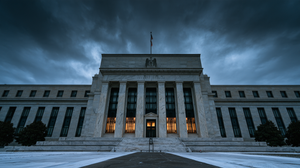
The Justice Department announced over the weekend that it is investigating NBC, CBS, ABC, CNN, and Fox News for potential antitrust violations — a probe the industry did not see coming and that First Amendment lawyers say has no obvious legal footing.
Sponsored

|
A $1,000 stake in Starbucks at its 1992 IPO is worth over $400,000 today.
That is a 40,000% return.
Enough to fund a retirement. Buy a second house. Cover a decade of not caring what the market did that morning.
Wall Street almost missed it.
Starbucks priced at $17 a share in June 1992. Split-adjusted, that is about $0.27. The IPO was oversubscribed, but nothing about the pitch screamed 40,000%. Starbucks was a Seattle chain with 165 stores. The biggest coffee brand in America was still Folgers.
The investors who bought at $0.27 did not need to be geniuses.
They needed to be early.
A new coffee empire is being built in the same window right now.
Different country. Different model. Same window.
Green Coffee Company owns 45 coffee farms in Colombia. 10 million trees. 10,000+ acres. Vertically integrated from tree to shelf. Own the farm, own the mill, own the distribution.
They hold the exclusive US and Canadian grocery rights to Juan Valdez, Colombia's most iconic coffee brand and a 75-year heritage name. Ten-year commercial agreement, locked in.
The products are on the shelf at Target, Walgreens, Harris Teeter, and 3,000+ North American stores across 21 states.
Revenue grew from $1M in 2021 to $26M in 2025.
The company is still private. Reserved NASDAQ ticker. Reg A+ qualified. Open to all investors, no accreditation required.
Individual investors can buy in at $1.15, per interest.
Minimum $1,001. Up to 20% bonus shares.
|
|
|
|
P.S. Starbucks was a 1992 story. This one is still pre-IPO.
|
Juan Valdez is a licensed brand. The Juan Valdez parties are not sponsors of this offering.
This is a paid advertisement for Green Coffee Company's Regulation A offering. Please read the offering circular at https://invest.greencoffeecompany.com/.
Timelines are subject to change. Listing on the NASDAQ is contingent upon necessary approvals, and reserving a ticker symbol does not guarantee a company's public listing.
|
|
On September 19, the White House revoked press credentials for CNN, MSNBC, and Politico — pulling their reporters' building access without a stated hearing process. Within days, the television press pool responded by suspending White House coverage. The pool is a cost-sharing arrangement among networks: they rotate camera duty and distribute footage to every outlet in the country. When the pool goes dark, so does official video of the president.
On September 24, a federal judge temporarily blocked the credential ban and ordered the passes restored. The pool resumed coverage. The story seemed to be closing.
Then, over the October 10–12 weekend, the Justice Department announced it had opened an antitrust investigation into all five major broadcast networks — NBC, CBS, ABC, CNN, and Fox News — for their role in the pool suspension. The DOJ cited the Sherman Act and described the coordinated shutdown as a potential "group boycott among commercial competitors."
—The antitrust theory is thin on its face
The Sherman Act's group boycott doctrine applies to commercial competitors coordinating to harm a market participant — a supplier, a customer, a rival. The networks' stated reason for suspending pool coverage was solidarity with a competitor that lost press access, not market advantage. Legal scholars who study media antitrust say the DOJ would need to show market harm to a buyer or seller of services, not a political grievance. That bar has not yet been articulated publicly by the department.
—The timing is the signal, not the substance
The credential ban was struck down by a court. The pool resumed. The matter was resolved through normal legal channels. Announcing an antitrust probe into the same conduct — after a judge already ruled it improper to block the press — is less about prosecuting a case than about filing the paperwork. The cost of being investigated is real even when the case never proceeds: legal fees, compliance burdens, and the chilling effect on editorial decisions. The investigation is the instrument, not a precursor to one.
—The structural concern outlasts the case
No antitrust penalty is imminent. But what this probe establishes as a precedent matters: the theory that broadcast competitors coordinating in response to a government action — any coordinated action — could constitute a Sherman Act violation. If that theory survives judicial scrutiny, the networks lose the ability to respond collectively to any future credential revocations or coverage restrictions. The next pool boycott becomes legally risky before it starts. For a pre-retiree invested in media stocks, this matters less as a legal development than as a regulatory posture — the kind that reshapes how broadcast networks make coverage decisions over the next two to four years.
Sponsored
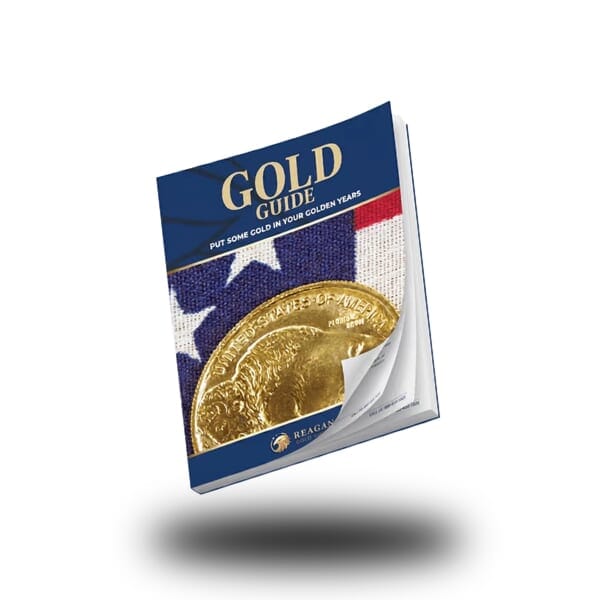
Only 2,500 complimentary copies were set aside for this release.
And they reveal something every American nearing retirement should see:
What Washington isn't saying about the U.S. dollar — and what it could mean for the money you spent decades building.
Claim my free copy here.
Inside: the global move away from the dollar, Washington's money creation, and the growing push toward a digital dollar.
This guide costs you nothing.
But complimentary access is limited to this release.
|
|
|
|
America's dollar has survived a lot.
But 3 forces are now putting retirement savings under a microscope:
→ More global trade moving outside the U.S. dollar
→ Washington's massive debt and continued money creation
→ The growing push toward a government-backed digital dollar
Don't be the person hearing upcoming changes after everyone else.
|
|
|
|
Reagan Gold Group does not provide financial, legal, or tax advice. This information is for educational purposes only and should not be considered investment advice. All investments carry risk, including loss of principal. Past performance is not indicative of future results. Consult your licensed financial advisor before making investment decisions.
|
|
"Group boycotts among commercial competitors can violate the Sherman Act."
— DOJ spokesperson, October 10, 2026
"The government should not use antitrust investigations to intimidate news outlets defending press access."
— Jose Zamora, Committee to Protect Journalists, Americas
5 of 5 major broadcast networks
Outlets that lost credentials
Sherman Act pool precedent
"In freight, when a shipper locks you off the dock — changes the gate code, revokes your carrier authority for one lane — the other carriers in your consortium stop loading that shipper's freight until the gate reopens. It's not a boycott in the legal sense. It's a signal: you touch one of us, you lose all of us. Terminal operators call it collective leverage. It's been used since the first rail cartels, and courts have never successfully framed it as an antitrust violation when the underlying grievance is access, not price-fixing. The DOJ is trying to reclassify a solidarity action as a commercial conspiracy. The case is the paperwork on the outside of the container. What's actually moving inside is a precedent about whether the government can use antitrust law to price collective press action out of the market."
Art Callahan · Ex-logistics auditor · The Backhaul Report
Sources & Sourcing
Confirmed: DOJ antitrust investigation announced Oct 10–12, 2026, targeting NBC, CBS, ABC, CNN, and Fox News (DOJ spokesperson via Time News, Deadline, CNBC). Sherman Act group boycott theory cited. White House revoked press credentials for CNN, MSNBC, and Politico on September 19, 2026. Five networks suspended White House TV pool coverage in solidarity. Federal judge temporarily blocked credential ban and ordered passes restored, September 24, 2026. Pool resumed coverage. No charges filed; investigation status only.
Context: The probe covers the same window as the court-overruled credential ban. DOJ has not clarified whether it has standing. No existing Sherman Act precedent applies to a press pool solidarity suspension. Committee to Protect Journalists expressed concern about government use of antitrust law against news organizations.